Other contributors: Val Bednar, Alun Freem, Piers Hallihan, Paul Tarrent & Phill Thomas
Photos by: Andy Freem, Antonia Freem, Duncan Hornby & Claire Vivian
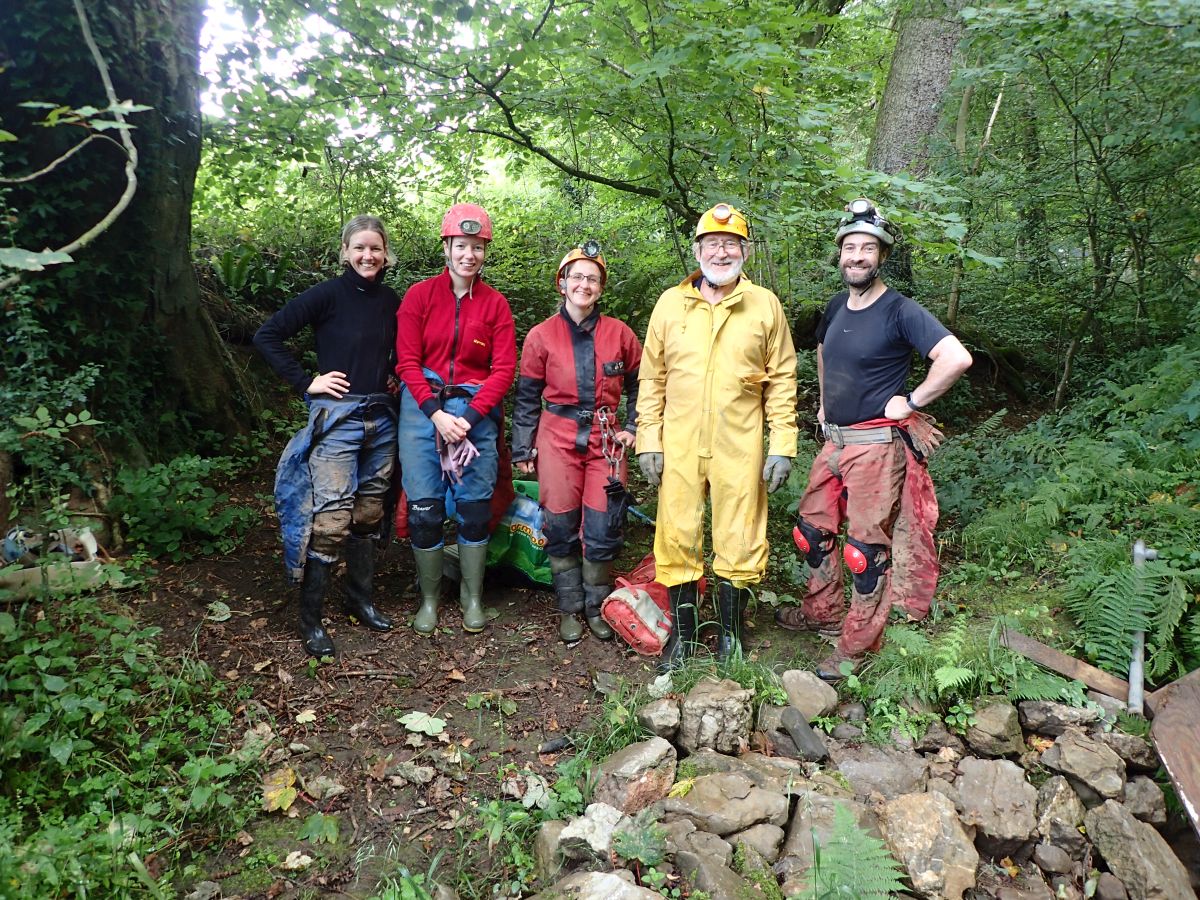
Llethryd Swallet is a cave found on the Gower peninsula that takes an active stream and became blocked in 2003. A team has been working on gaining access into the system for the last 3 years. Initial attempts focussed on an alternate way in, which became known as Barns Cave and is documented in an earlier blog. Although Barns Cave offered a promising alternative route into the main system a line survey revealed that it was trending in the wrong direction.
Attention was then focussed on the original entrance. A concerted effort was made to join the main streamway by finding an alternative higher route that avoided the blocked section.

 |
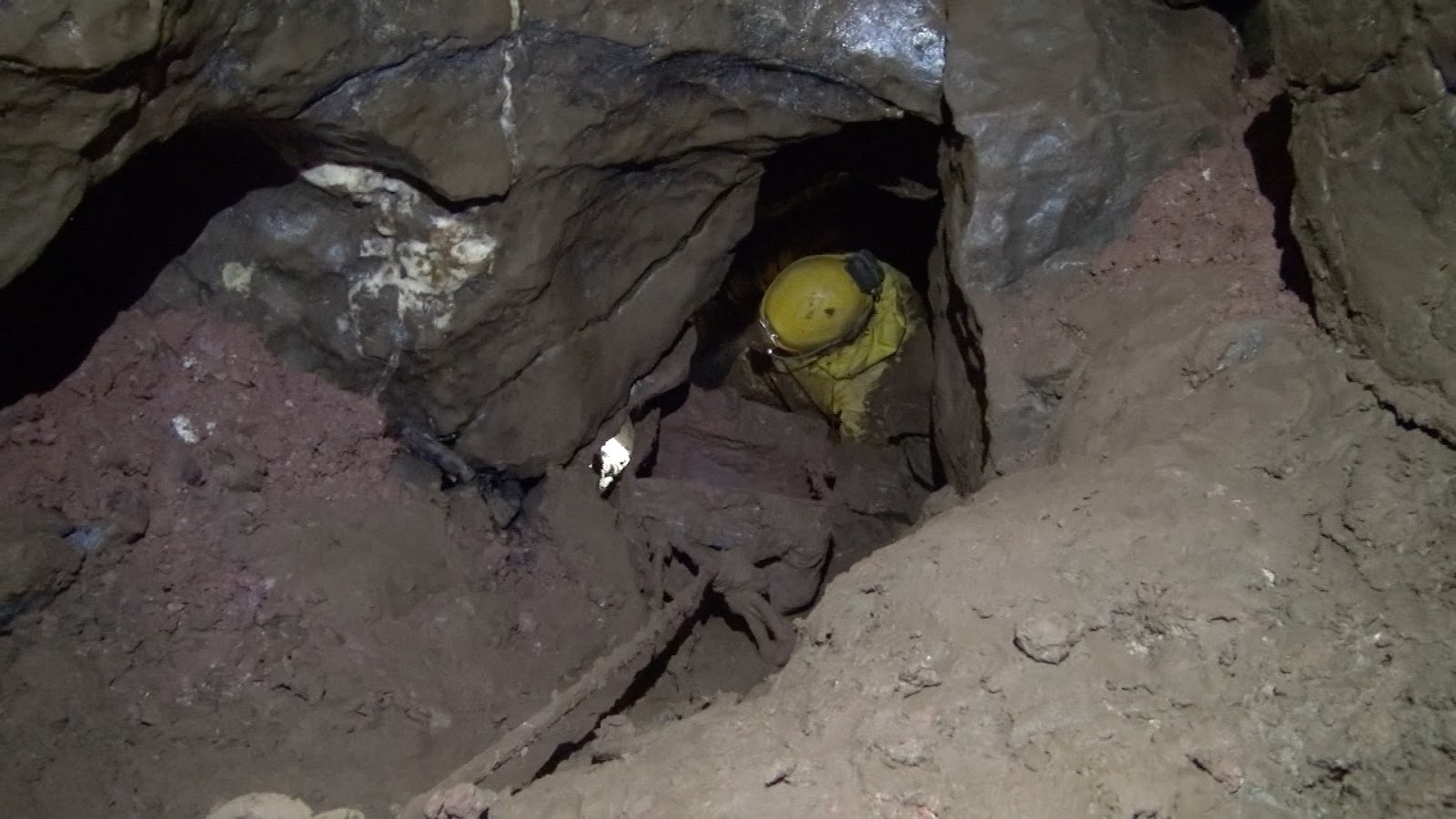
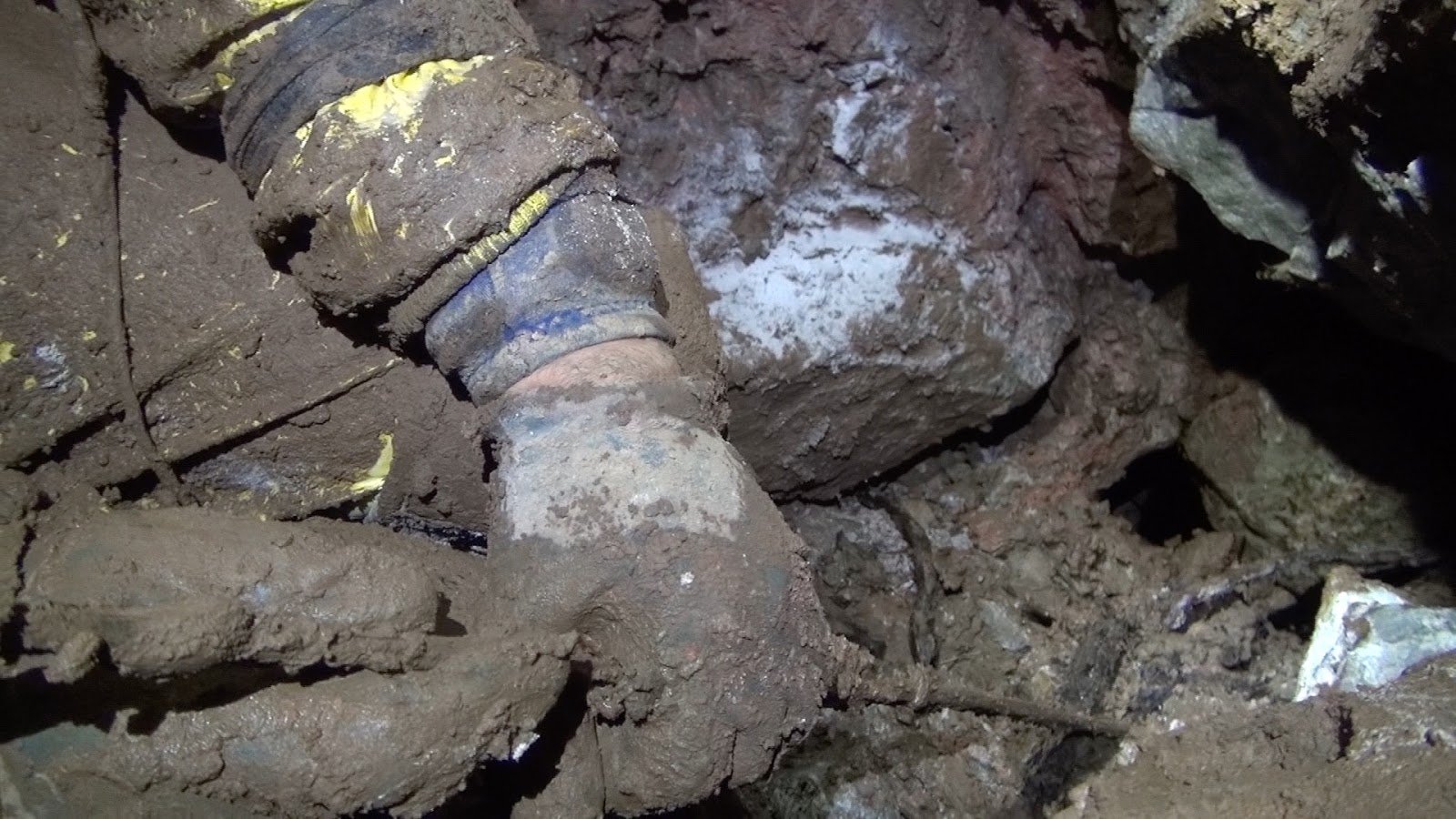
| Pushing alternate routes took the team into some rather tight spaces! |
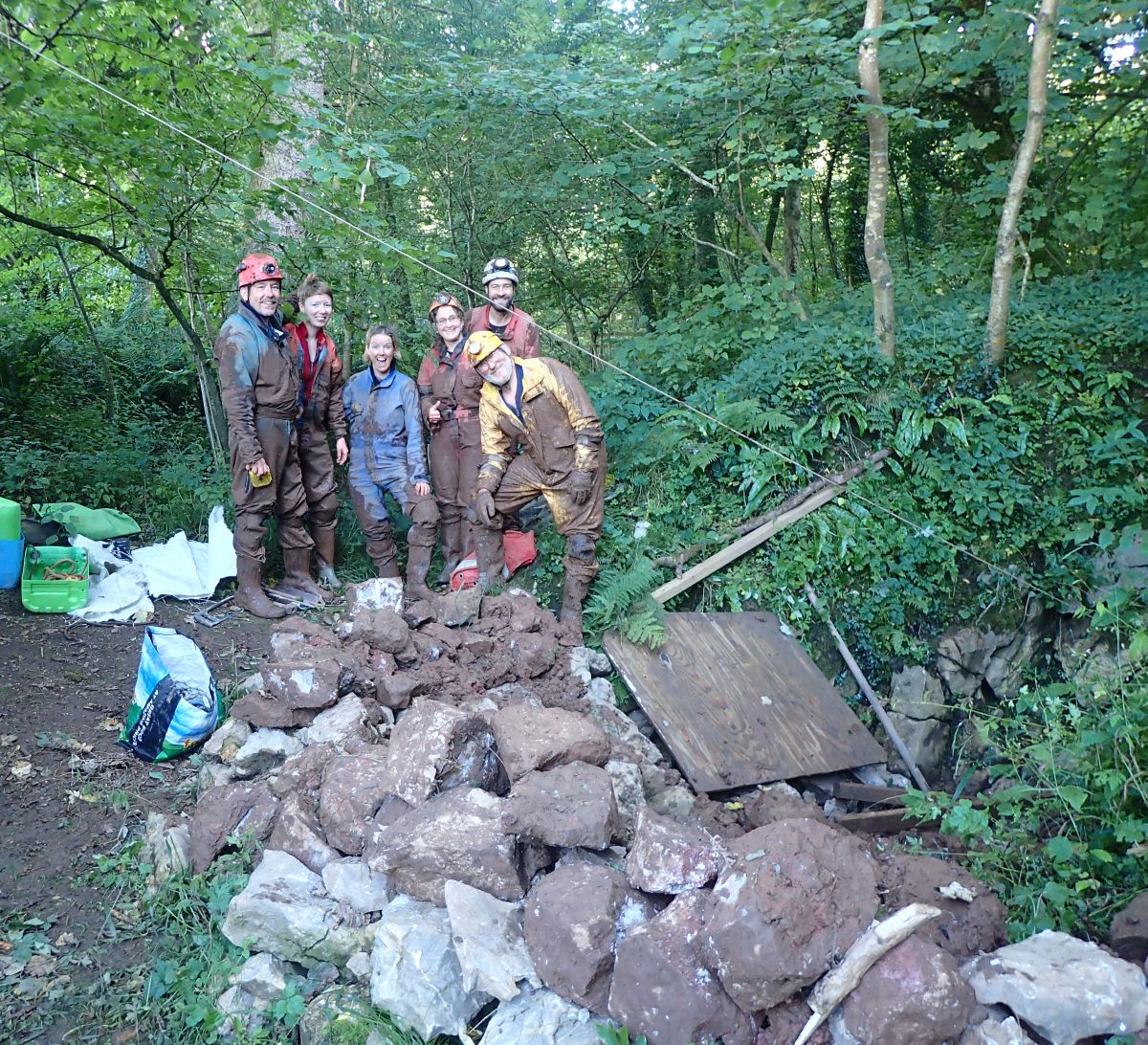
After several digging sessions led by the local cavers a breakthrough was made in August 2021, regaining access to the main stream and the way on to the impressive main chamber.
None of this could have been achieved without the permission of the landowners as there is no right of way to the cave entrances. Access arrangements have been set up for permitted caving groups, more details on access can be found at the end of this article.
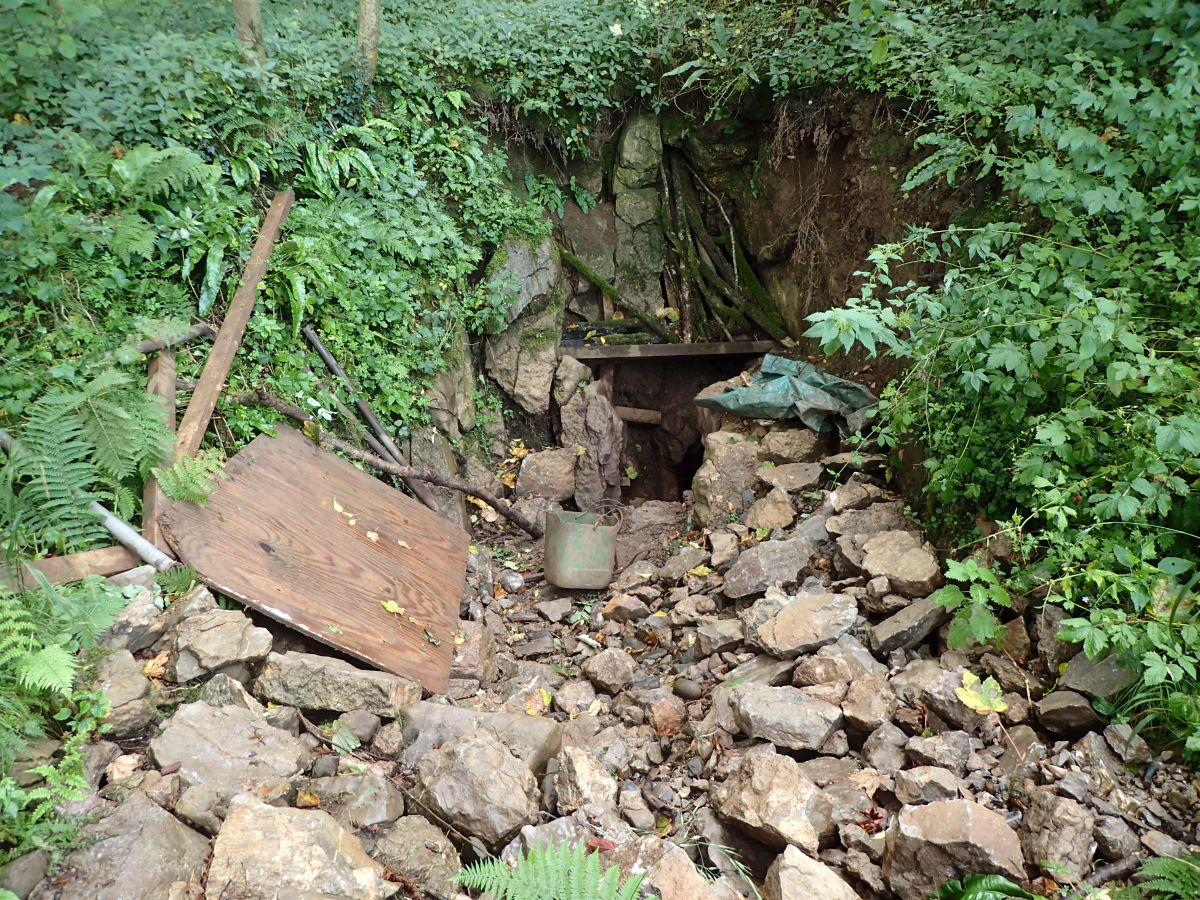
Recent flood events indicate many passages flood to the roof as indicated by leaf litter, so this is a cave that is not to be entered under wet conditions especially if weather reports forecast heavy rain. The swallet entrance can back up several metres to the height of the cavers door entrance.
 |
| The swallet in low flow conditions. The cavers door entrance is just off to the right of this picture. |
 |
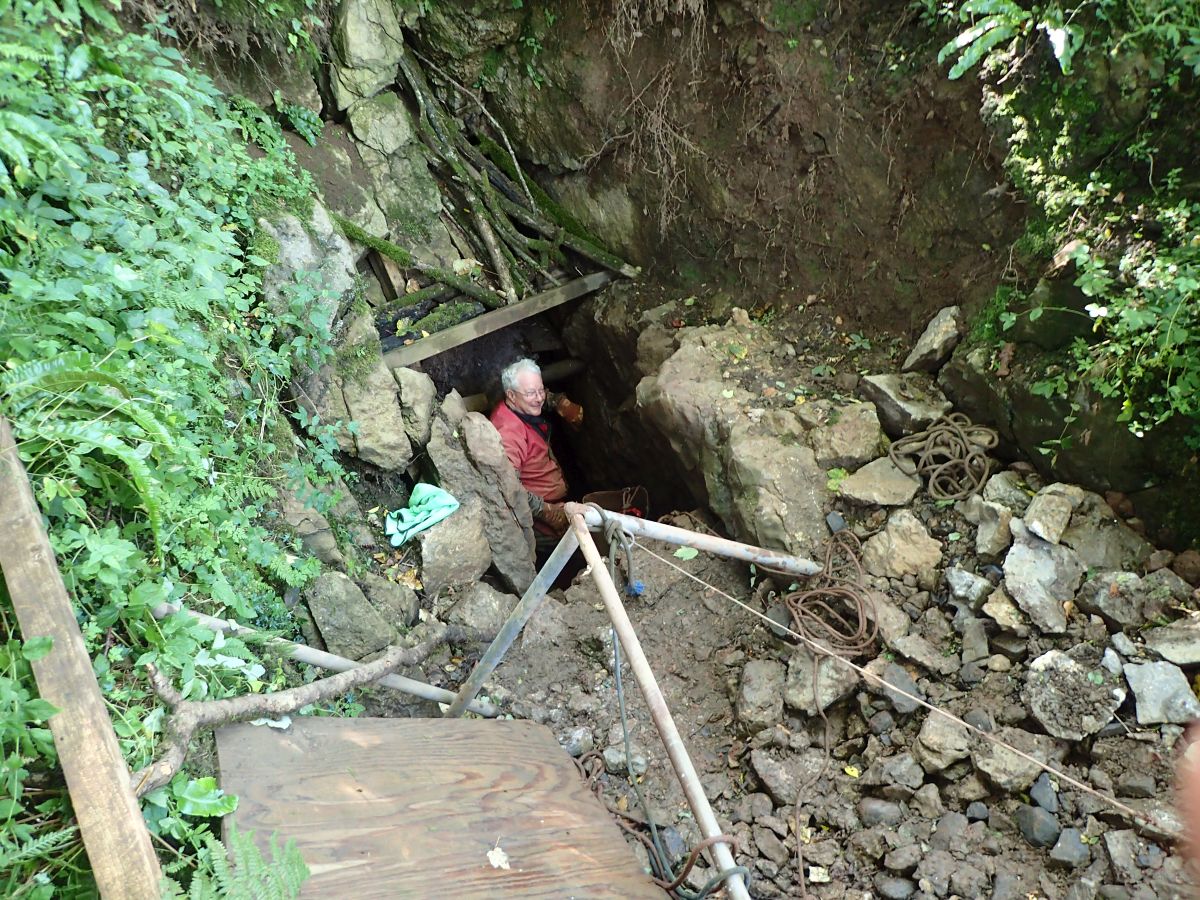
| The cavers door entrance. Under high flow conditions this entrance gets submerged! Note all the debris. |
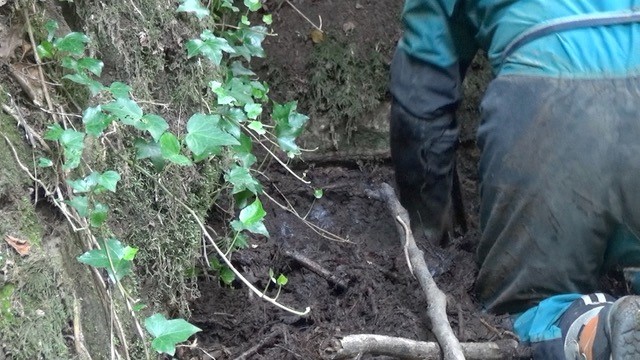 |
| After any severe flooding the caver's door often needs to be dug out. |
There are two technical sections through the entrance crawl that require great care, this is not a trip for novice cavers. The first challenge is under a scaffolded multi-tonne boulder named the S-bend. Small people can get into the void and get round the bend head first, the rest of us have to reverse around the corner legs first up a slope. So a nightmare going in but much easier going out! Large people will likely find this obstacle very difficult if not impossible to pass.
 |
| Andy entering the S-bend. The scaffolding is securing a large boulder above. |
The second challenge is the Grim Reaper, a large boulder seemingly held up by nothing and the current way on is directly below it dropping onto a chock stone that appears to be holding everything together. The digging team is planning to shaw this up with scaffolding because my pants can’t take anymore of this!
After carefully navigating the somewhat concerning Grim Reaper everything gets considerably easier having regained the original main stream. Along here are some crawls and walking which eventually leads into the climb up into the main chamber. The ground becomes covered in a fine silt making it very slippy to walk on.
The cave takes on a dramatic change in size, initially passing a formation called the mushroom.
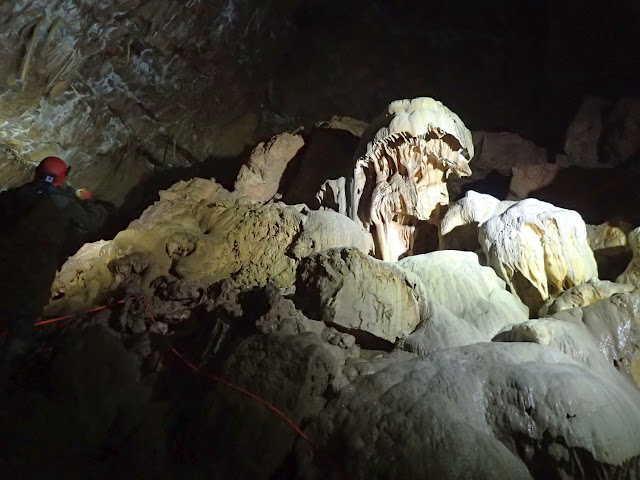 |
| The atomic mushroom! |
You enter the lower section of the main chamber and heading off to the left you pass many silt covered stals before entering the awesome main chamber.
Just before entering the main chamber the roof dips and you pass under various straws and helictites. One spiral shaped helictite makes a “zzzzzit” sound. On the first time I passed this formation I could not hear it but Claire swore blind it was making the sound. On a second trip the sound was louder and I could hear it but Antonia could not! Seems like the older you get the harder it is to hear.
 |
| The helictite in the roof that makes the zzzzit sound. |
We managed to record the sound which you can hear by clicking on the link below. You’ll hear a tapping sound in the background, that was water collecting in a container. But in the foreground you will hear a very faint “zzzzit” sound at about 1 second into this 3 second recording. You might need to listen to it several times before you hear it and bump up the volume on your computer. But it is there I promise you that.
The sound the helictite was making. Note there is no associated video with this sound recording.
The main chamber is a large sloping boulder filled void, with an impressively large curtain dominating the roof. The formations have a grandeur comparable to those often found in other European countries.
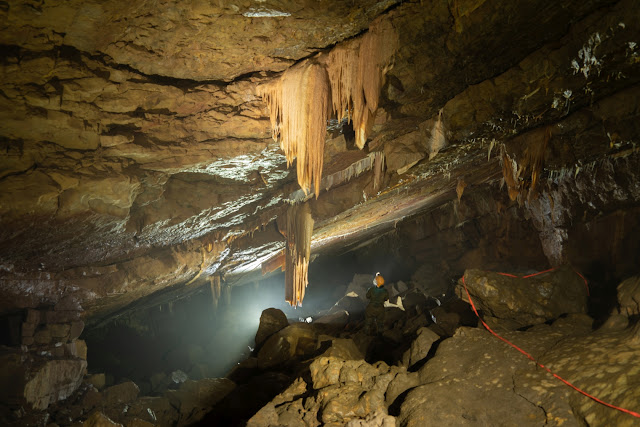 |
| Claire in the main chamber. |
 |
| Luke at the stunning curtain in the main chamber. |
At the top of the chamber is the formation known as the church and steeple which has been abused by past cavers climbing on it, no doubt for that glory photo shot.
This has become a centre of attention for restoration. I have to admit I was somewhat sceptical thinking the damage was done and whatever we could do was too little too late.
I could not have been more wrong.
Originally Andy had brought in a hand pump sprayer and I was amazed at the transformative power of this washing the muddy hand prints off the stalactite. What was dull and muddy suddenly burst into colour showing its translucent edges.
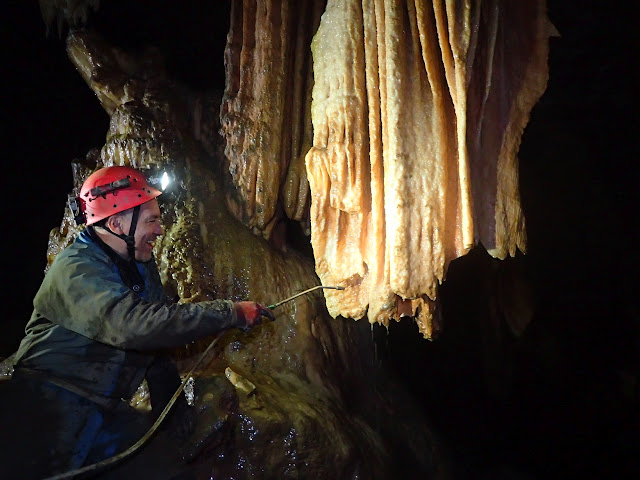 |
| Duncan uses the hand pump sprayer to do the initial cleaning of the stalactite, note the muddy edges on the background stalactite, that's all gone now. |
All I could think of was, I have a battery powered jet washer I use at home for cleaning my bike/car, that would blast off the mud!
We have had 2 subsequent trips where I have brought my jet washer into the cave and using water sourced from the stream we have begun transforming the damaged formation into something that frankly looks awesome!
 |
| Duncan using his jet washer, note for comparison the mud covered front of the base of the formation, much of that has started to be removed. |
This formation has suffered significant abuse in the past and it will take several further sessions to restore it to its former glory for future cavers to enjoy.
The jet washer used was a battery powered worx hydroshot.
If you know the route, the main chamber can be reached in about 30 minutes from the entrance. No ropes\ladders are required to get to the main chamber.
Access restrictions:
Since the cave blockage in 2003, land ownerships have changed and all previous access arrangements (e.g., in Tim Stratford’s book) are now obsolete.
- Llethryd Swallet can suffer total flooding, sumping the entrance series for extended periods. Passage instability exacerbated by regular violent flooding can add to the excitement. Cavers entering the land and caves do so entirely at their own risk and risk assessment. The caves must not be entered immediately after a period of heavy rain, or when significant rain is forecast. In winter, water backs up from ‘terminal’ sumps and submerges all access passages for long periods.
- The issuing of a permit is not a guarantee that access will be physically possible.
- Due to the seriousness of the cave no novice cavers are permitted. Several tight/sinuous sections in the new entrance sections have a ‘size limit’. Rescue from flood entrapment or injury would be problematic.
- All cavers are required by the landowners to hold BCA cavers’ insurance.
- The caves (within an SSSI) are gated and locked ( NRW and Landowner stipulations). A key will be made available on-site on the booked days only for pre-booked, permit holding parties (1 per day). Groups are asked to be considerate to others in the caving community by not booking multiple days at this stage in the re-opening process. Evening trips will be possible.
- Keys must be returned to the on-site key safe immediately after each trip.
- Access is free. We hope that groups will support and comply with the arrangements making this possible.
- To avoid conflict with other landowners, access must be via the car park at the south end of Green Cwm (Parkmill), walking up the valley and crossing into the Llethryd Barns land at the south end. Detailed instructions will be given.
- There is no right of way to the cave entrances and the agreed paths are only for use by permitted caving groups.
- Full updated instructions and a (conditional) permit for Llethryd and Barns caves can be obtained by email. An illustrated instruction sheet showing surface access, routes inside the caves, and current issues will be sent with each permit.
- Please use this address for enquiries: llethrydswallet@llethrydbarns.co.uk