Friday, 1 September 2017

Chilled in the Cheddar Chamber

Trip date: 26th August 2017

Team: Tarquin Wilton-Jones, Morgan Specht, Dave Coulson. Warden: Mike Kushy

Another of those caves on my wishlist, Reservoir Hole had traditionally had access problems, but access is now possible with a formal warden system. Once again, the trip was set up by our club meets secretary. With a last minute substitution of warden, a change from morning to evening, and three separate changes in team members, it really does help to have someone patiently taking care of the arrangements. Dave, Mike, Tarquin and Morgan at the entrance - picture by Morgan

Located below the tallest cliffs of the Cheddar Gorge in Mendip, its presence had first been suspected when the construction of a small covered reservoir was plagued by water sinking through its walls. A draughting hole at the foot of the cliffs above the reservoir was the start of an extremely long digging project, which eventually uncovered a streamway, enormous rift passages aligned on a series of faults, and then finally the crowning glory of one of the largest chambers in Britain, adorned with spectacular formations.

This was to be my first attempt at cave photography in over 9 years, and by far the largest underground space I have ever tried to photograph. Definitely a little rusty. My two flashguns were rated for 30 metre and 15 metre use, which would not be enough for a chamber that size, but Morgan had the foresight to bring a second 15 metre flashgun. With two slave units, it should have been possible to take the pictures on bulb setting and manual firing of the first flashgun. However, one of the slave units consistently failed to operate, so we resorted to using manual firing of two of the flashguns. Without a tripod, shaky hands and slight timing differences between flash firings meant that there might be some unexpected duplication and ghosting in certain areas, but this is a limitation we would have to live with - it only affects a single picture. Unless otherwise stated, camera, setups and edits by Tarquin, flash and modelling by Morgan, Dave and Mike.

The trip began at dinner time on a bank holiday weekend, competing with the droves of sightseers for parking space. We handed over our signed liability waivers and access fees, and headed into an oddly placed hole above the reservoir - the hole which must once have been a sink taking water from the gorge before the gorge was cut deeper below it. Surrounded by a host of cave spiders, their eggsacs and shed skins, and a single sleeping lesser horseshoe bat who seemed not to know what time of year it was. Dave at the Main Dig spiral staircase, flash by Mike and Morgan

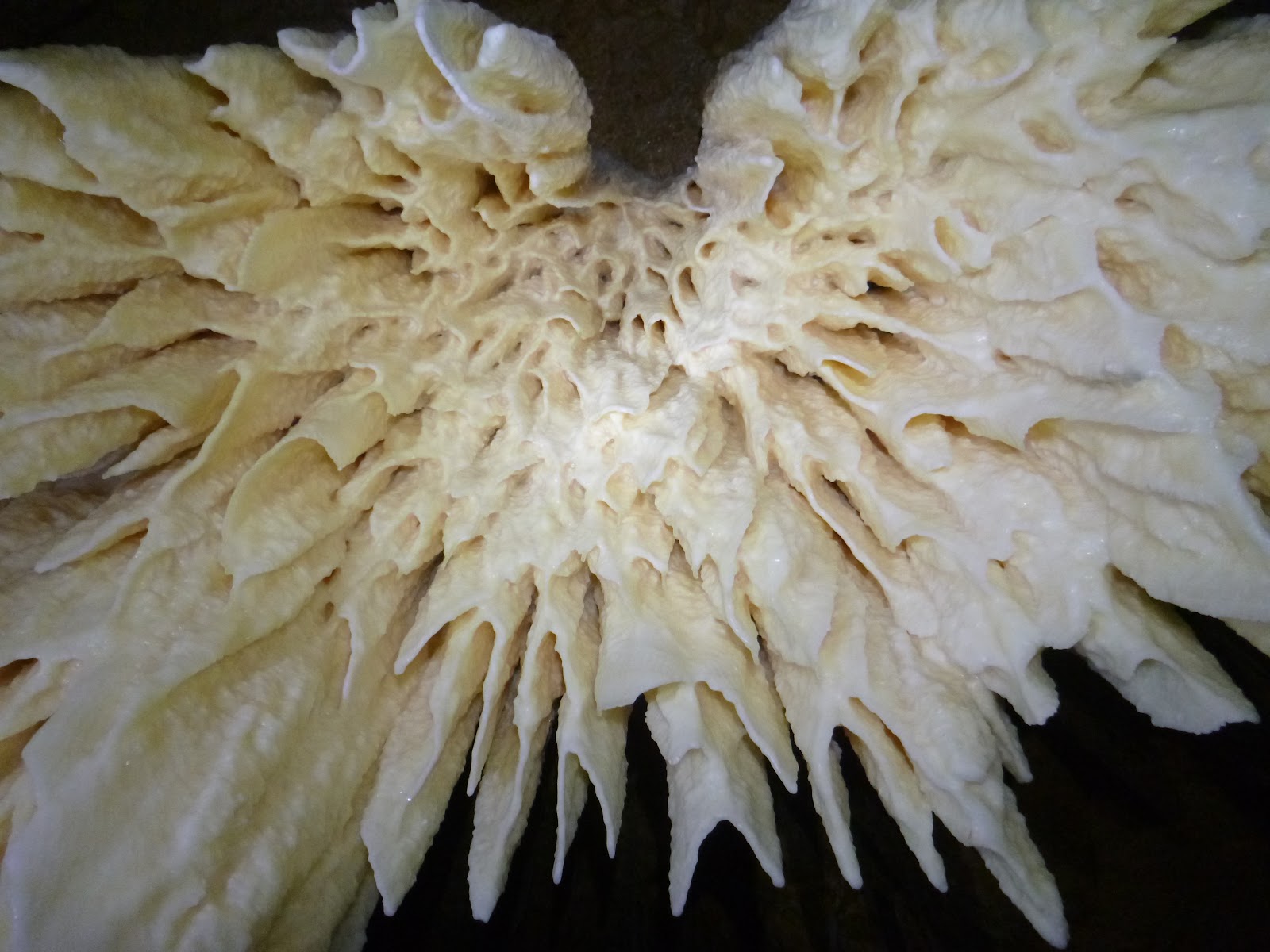
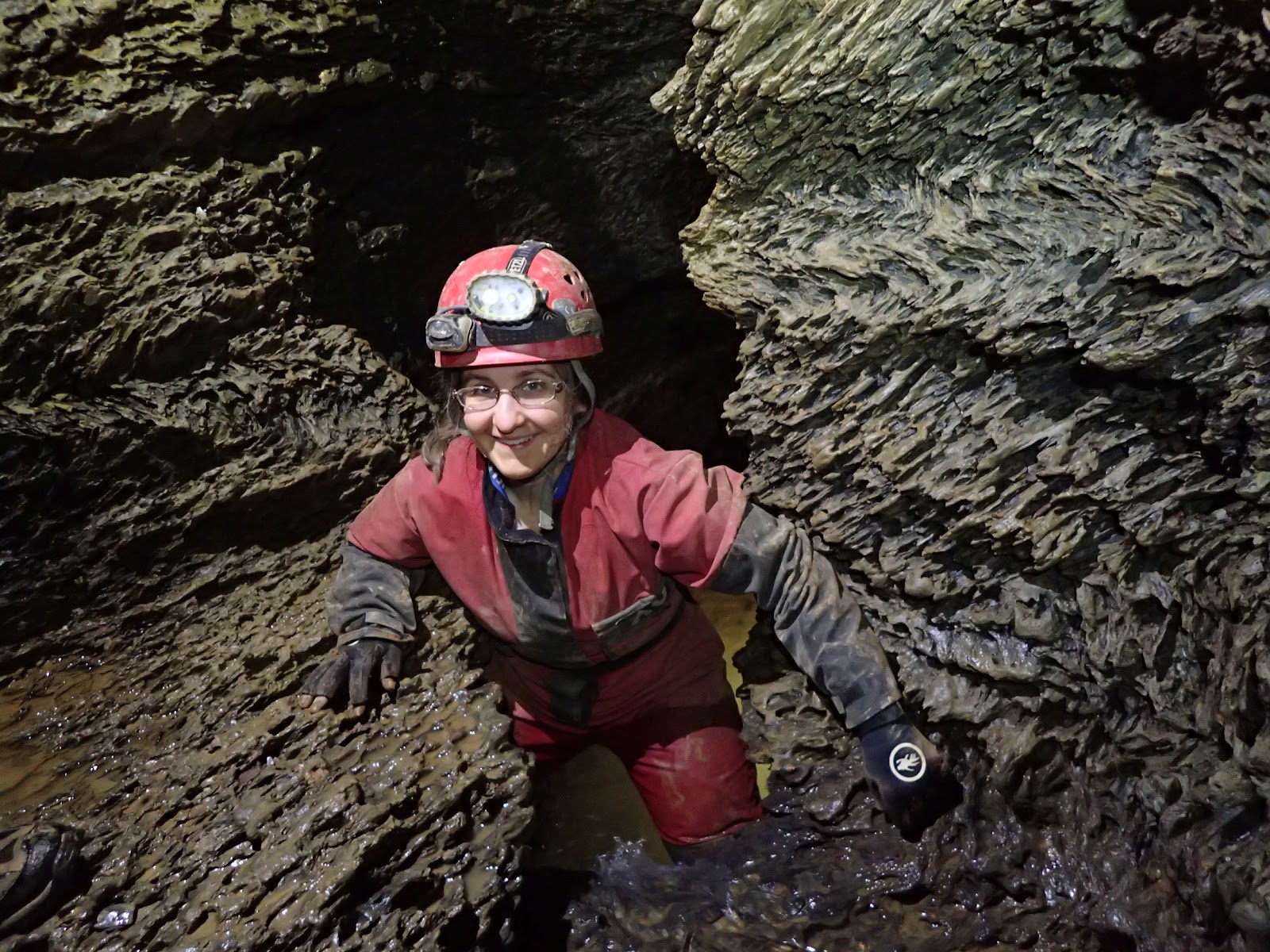
The sloping little passage soon reached the Stanton's Drive dig, and the beginning of the finest example of underground engineering that Britain has to offer. The boulder choke had been neatly rearranged into a perfect dry stone wall, leading into Moonmilk Chamber, whose walls were covered in a thick coating of soft, white moonmilk, with a pristine bobbled surface texture. In the floor, the Main Dig began, following a seemingly insane path downwards through a boulder choke for a depth of some 45 metres. Step after step, climb after climb, all neatly arranged into dry stone walls, and perfect spiral staircases of rocks. Mostly with no scaffolding or shoring (though one section had a few sleepers). Every bit as impressive as the final chamber. Dave in the Grand Gallery, flash by Morgan
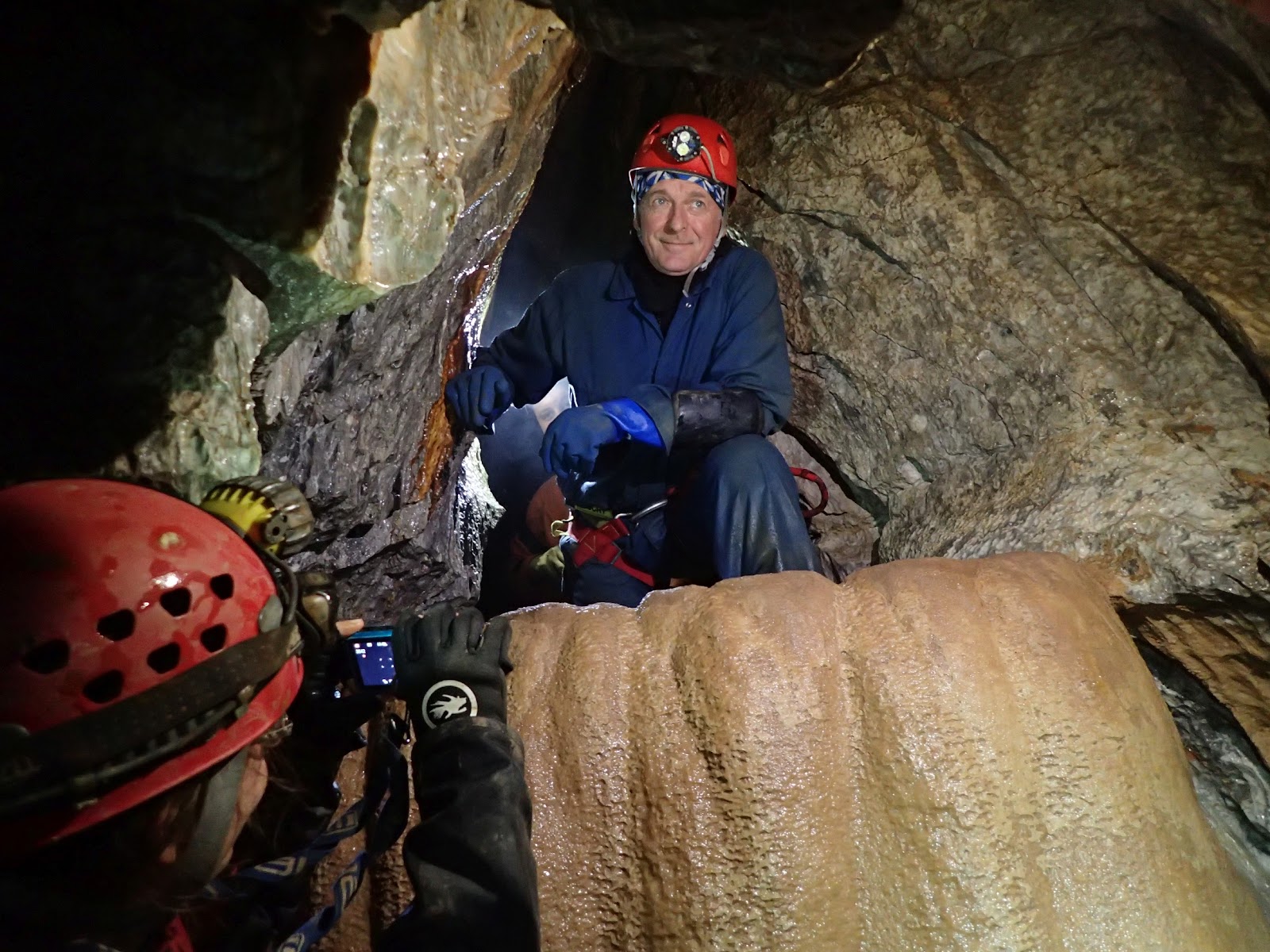
Dave with the Three Wise Men formation in Topless Aven, flash by Morgan and Tarquin

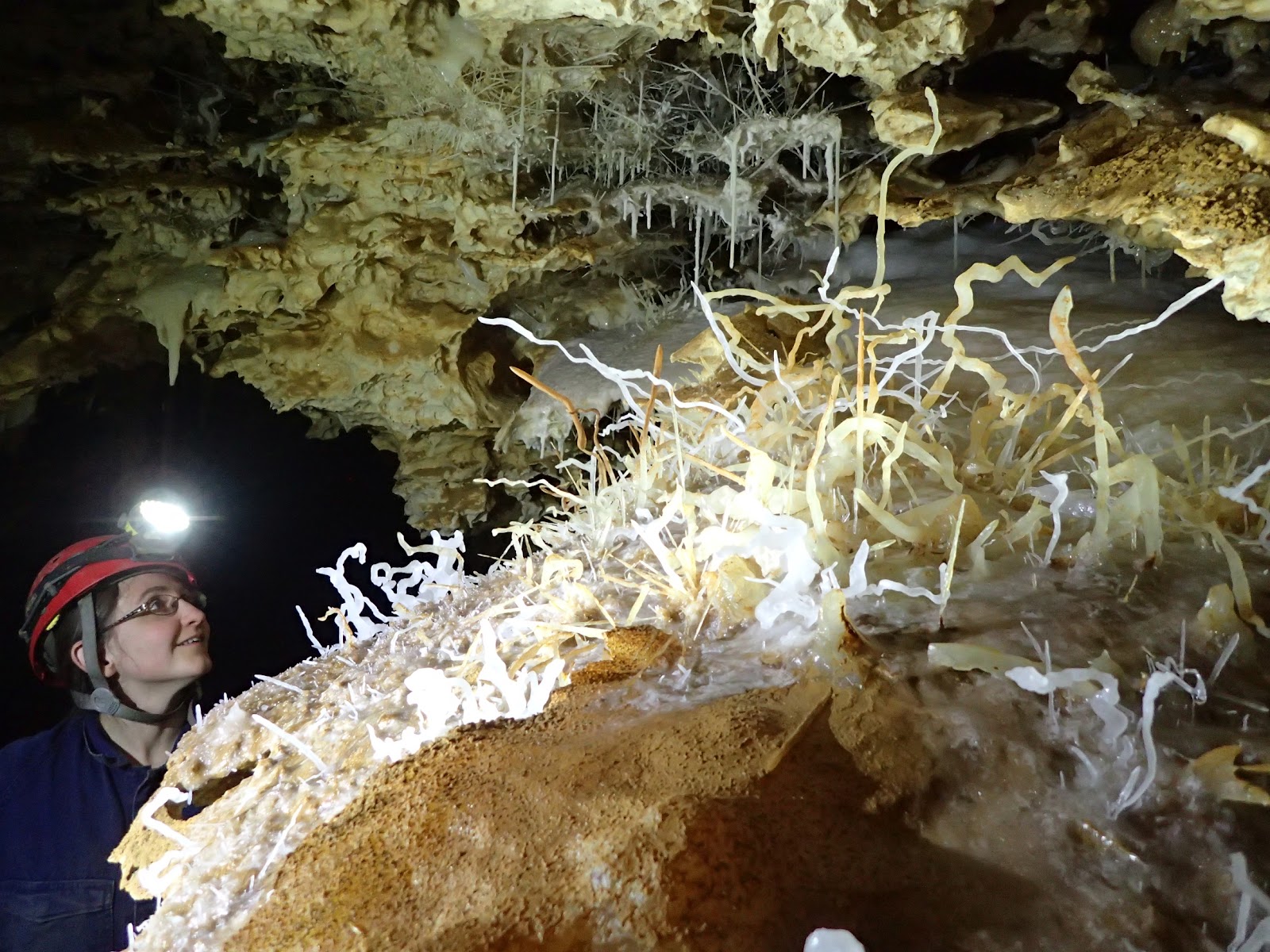
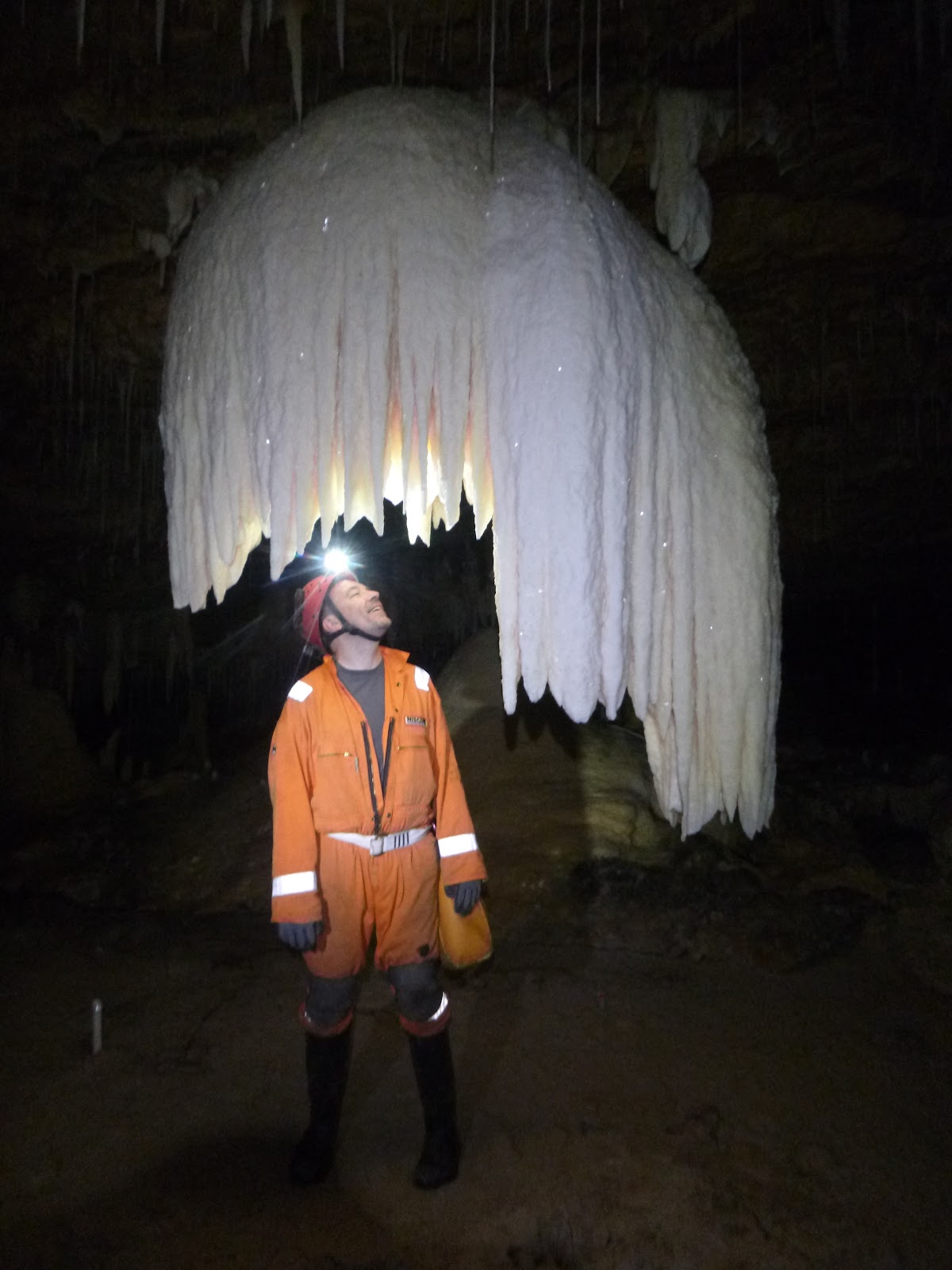
A tiny inlet brought a sudden change in character, as the cave broke into a large phreatic tube; Grand Gallery. This short-lived spectacle ended at the climb into Topless Aven, the first immense rift soaring some 30 metres up into the darkness. A handline served to deter cavers from accidentally touching the formations. From here, the route split, with the original digger trying ahead into Hard Times, then giving up and trying upwards instead, eventually finding Golgotha rift. The most impressive extensions were then found by retrying at the end of Hard Times, with the original digger sadly missing out on the major breakthrough which had been so well earned. In order to avoid tracking mud into the decorated parts of the system, we went ahead first, through the Hard Times crawl, and into Resurection, another immense aven lying on the original fault. A ladder climb part way up the rift gave access to a balcony where a double ladder pitch dropped into an immense fault rift. Resurection Columns in the Frozen Deep

This is the beginning of the Frozen Deep, the largest chamber in Britain by surface area at 2981 square metres, but second by volume at 39328 cubic metres (after Gaping Gill's Main Chamber). Ahead, the far point of the chamber was some 79 metres away, with calcite flows decorating almost every part of the rift walls, and a superb grotto in the rift ahead. Morgan set up the ladders and lifelines, and we took our turns to enter the vast space. As we dropped into the rift, it became apparent that this was just one end of the chamber. To the right, a 40 metre wide archway adorned with two stupendous stal colums and a lengthy stalactite, gave access to the vast open space of the chamber, disappearing for 71 metres into the darkness. This was no ordinary space, and lighting it would certainly be a challenge. Towards the grotto, note the vertical scratches at the left edge
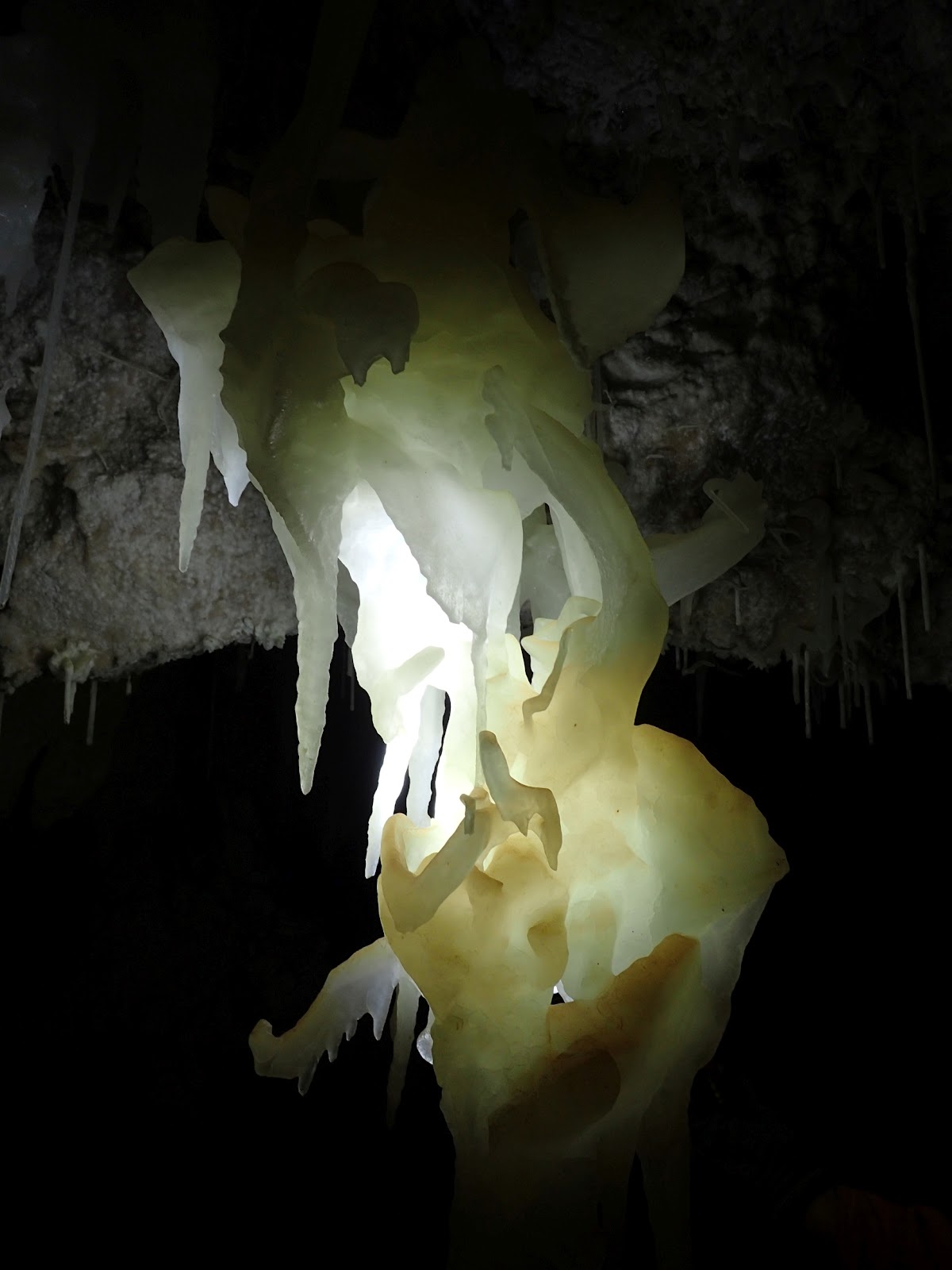
The grotto, flash by Mike and Morgan

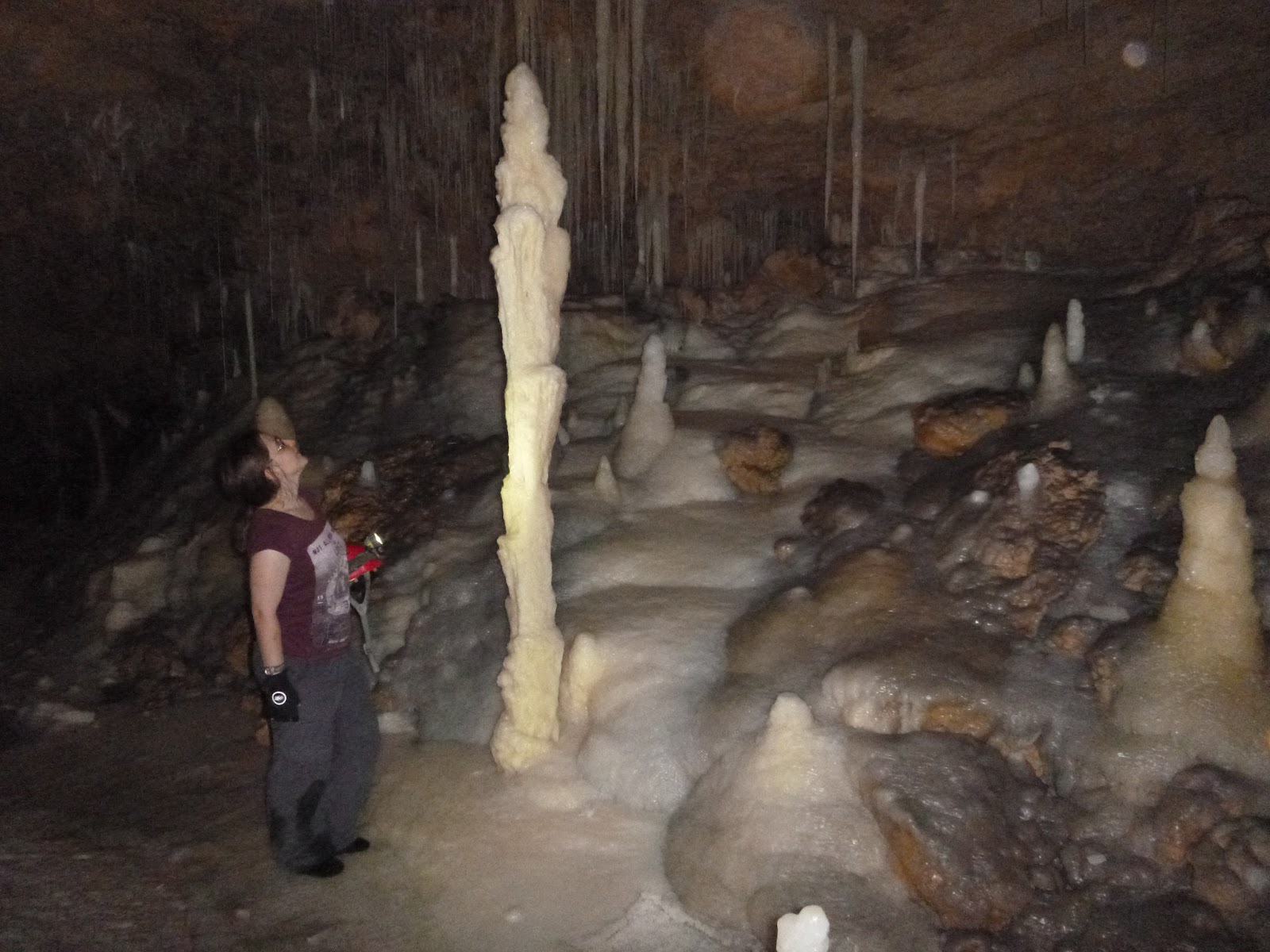
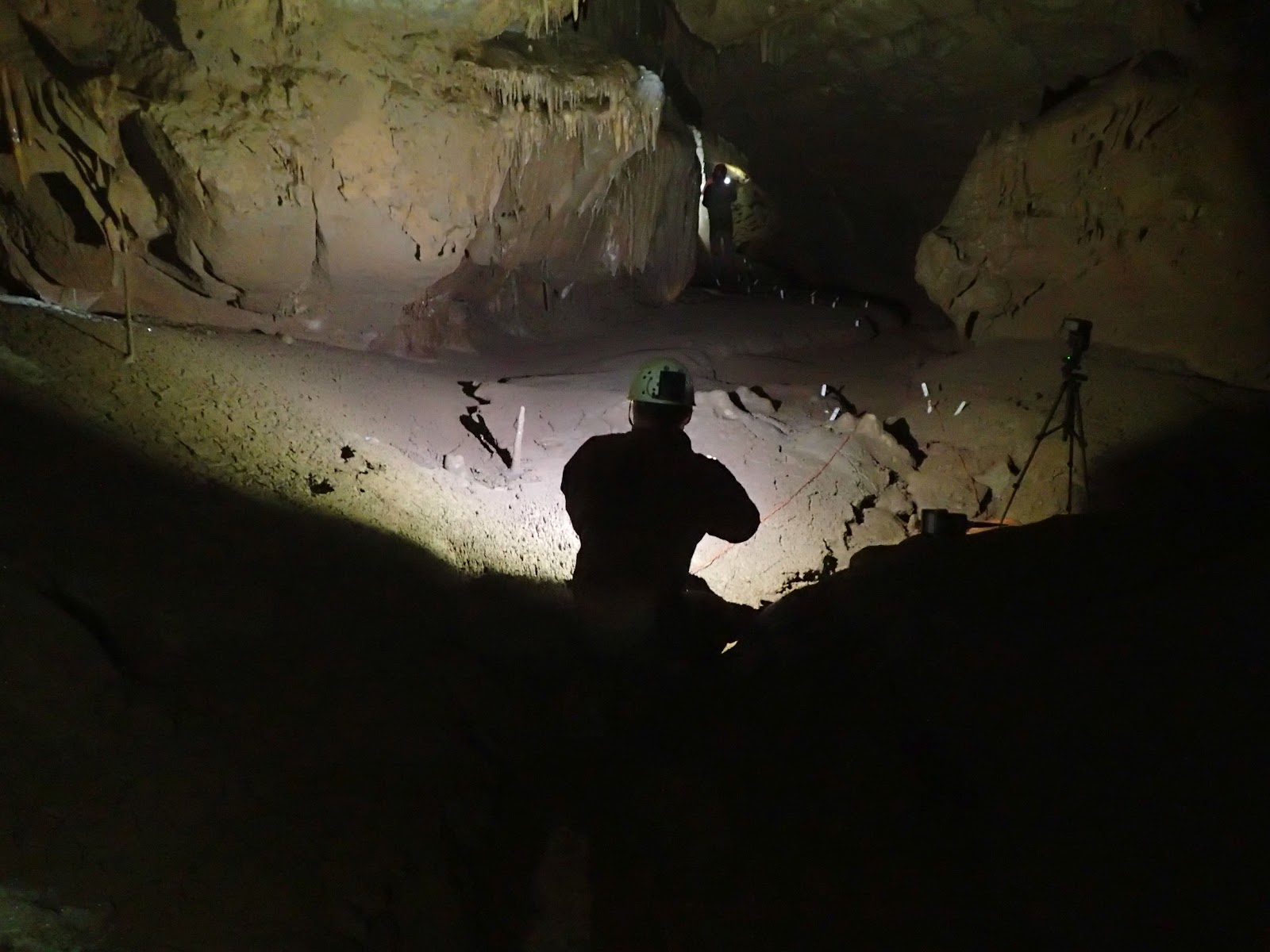
We started by heading towards the grotto, passing a stal slope climbing 30 metres up the wall, topped with a giant stalactite. The grotto itself was quite stunning, though in order to preserve the floor, the only possible viewpoint is a little obscured, and it is hard to photograph, with no way to provide a sense of scale. It is definitely best seen in person rather than in a picture. Scratches on the overhanging fault wall from falling boulders at first seemed to make no sense, until they were explained as the scratch from a boulder slowly descending on the surface of a melting ice plug, constantly being pushed into the wall by the ice. Something none of us had seen anywhere else before. The dustings of mud on the rocks all over the chamber were revealed to have a similar origin, essentially the moraines from the underground glacier, which filled the space that must have existed for eons before the last ice age. Morgan and Mike in the first quarter of the Frozen Deep The phreatic two thirds of Frozen Deep

Heading through the archway into the other three quarters of the chamber, the size could be really appreciated. The stal became less prominent, though still admirable. The paths climbed down little ladders and created a looping route through the phreatic arches, where the oversized scallops on the walls showed that this colossal chamber was an active phreas in its largely original state, and not the result of a collapse. At the far end of the chamber, a hole in the floor dropped to the lowest point of the cave, which we avoided because of its mud. Up in the ceiling, some 52 metres above, avens accessed a series of roof passages, climbing high up to separate tops, including the highest point in the cave. On the right at the end of the chamber is the ascent into High Country, whose passage ends very close to the floor of the gorge, apparently close enough to hear the traffic. We avoided this so that we would not bring its mud back into the chamber. It would have needed SRT kit to do the roof passages anyway.

The bottom half of Golgotha
Instead, we returned, taking our pictures on the way back to Topless Aven. The other team members proved to be admirable models, patiently obeying commands shouted across the huge spaces, and retaking each shot with each little adjustment. Cave photography is a slow, cold process. Turn a little left. Aim the flash a little higher. Put your foot on the rock. Try not to look like you are peeing on the stal. Close your oversuit because it makes you look ... big boned. Light up that stal so I can focus. Light up the scene so I can frame the shot. Ready? Lights off. Open. And FIRE! Close. Nearly right, but the middle flash didn't fire properly. Can we put the more powerful flash in the middle position instead? Try again.

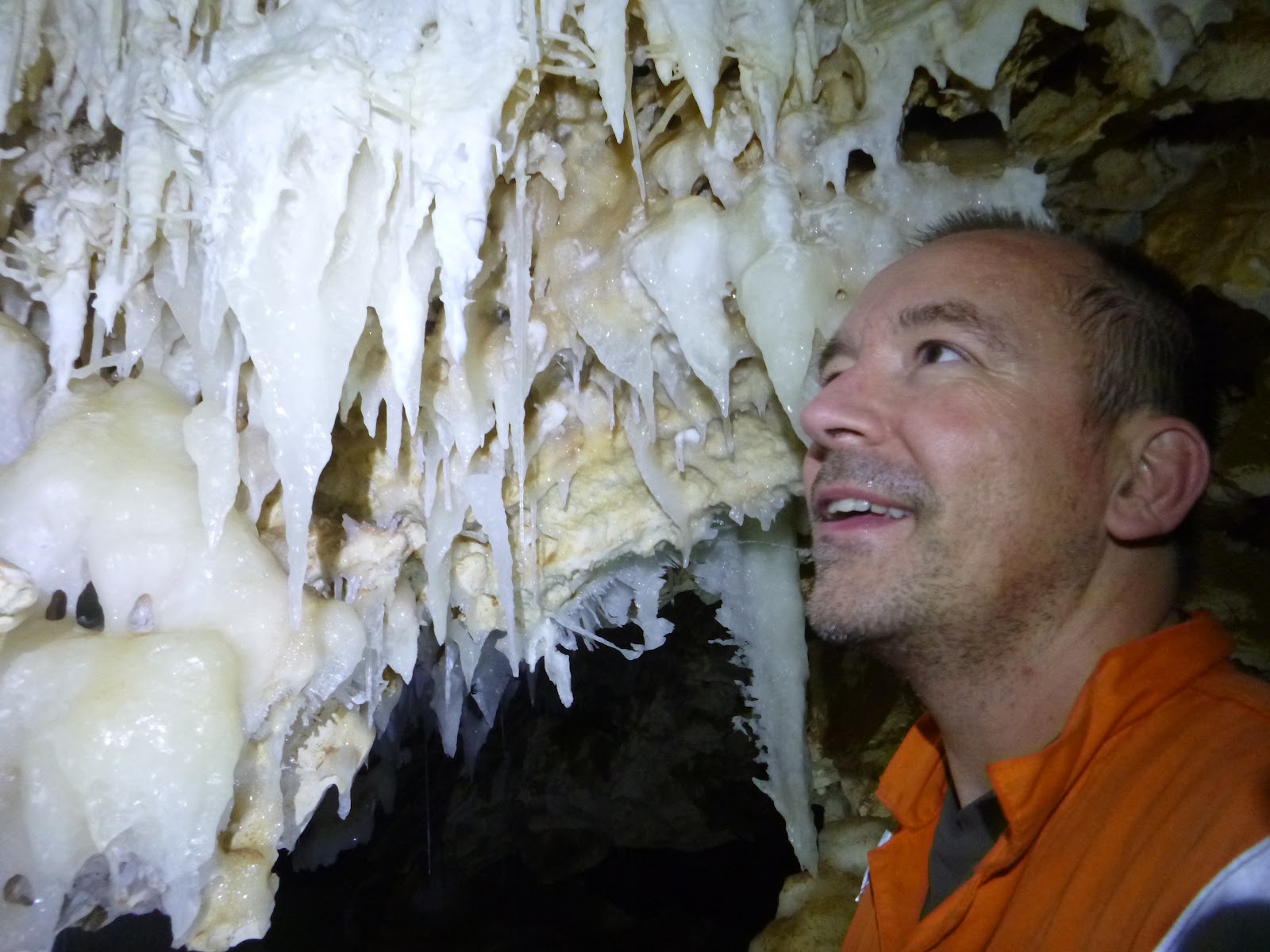
Tarquin with skull-shaped stal in Herbert's Attic - camera and setup by Morgan, lighting by Dave, edits by Tarquin

At Topless Aven, we climbed up another set of grand dry stone walls, rising 25 metres through a boulder choke. No scaffolding, no cement. Just dry stone walls, vertically climbing through a boulder choke. Crazy. Suddenly another change, and we were in Golgotha rift, the old main destination of the cave, and truly impressive in its own right. It climbed far into the distance above us, becoming steeper and steeper. We left the main camera at the bottom, and climbed up the roped climb through the hole far above us. This led to another rope climb, followed by a ladder and another rope ascent leading over an enormous boulder. At last we could see the muddy roof, where a final climb through a hole reached a dry-stone walled walkway, ending at a dig - Herbert's Attic - and one of the highest points in the cave. A large stalagmite is supposed to look like a skull (the reason for the name of the rift), where Morgan's compact camera took over from my DSLR.

The return through the boulders seemed a waste of height, since we would have to drop 90 metres back to one of the lowest parts of the cave just to re-ascend over 65 metres through the entrance chokes. The bats appeared at Topless Aven, flying around us as we made our way through the cave. At the bottom of the Main Dig choke, the sounds of the bats flying through narrow tubes created a very odd effect, combined with a strange roaring noise that sounded more like a collapsing choke. Once we emerged from the cave, these sounds were identified as the engines of the cars racing up and down the gorge, some 20 metres above where we had been standing. Clearly the cave had more surface connections than were currently known.

This really was a fascinating and very beautiful cave. Not just for the huge size of the chamber, and not just for the stal, but for the fault controlled rifts, the phreatic tubes, and the underground glacial moraines of the Frozen Deep. It is possible that the chamber may at some point have a route created for tourists, so that it can become another show cave like the others in the gorge. But the original entrance has its own attraction for cavers; the engineering has to be seen to be believed.

Thanks to Morgan and Dave for the company, to Mike for showing us around this awesome cave at such short notice, to all for making the pictures possible, and of course, a massive thanks to Claire for arranging yet another excellent trip.

Trip report: Tarquin Wilton-Jones

Wednesday, 23 August 2017

Walking and trampolines

19-20 August 2017
Team: Toby Dryden, Duncan Hornby, Barbara Lane and Claire Vivian

A super fast journey up to North Wales by Toby, Barbara and Claire directly contrasted with the 6 hour epic drive had by Duncan. Nevertheless, we were all together to enjoy food and a pint on Friday evening. We stayed at the Vagabond Bunkhouse in Betws y Coed, which was convenientley situated for what we wanted to do, though not the best bunkhouse we have found in Betws. 

Saturday
The forecast had promised a dry and partially cloudy day. So when the curtains were opened revealing a black sky and steady rain, it was a disappointment. It was rumoured to be clearing up later in the day, so we all continued with our plans for the day. Barbara went to explore Swallow Falls, Claire and Duncan went up Glyder Fawr and Fach and Toby visited local friends.  


Glyders
I had wanted to go up the North Ridge of Tryfan and then on to Glyder Fach and Fawr and down Devil's Kitchen. However, when we reached the carpark on the shore of Llyn Ogwen an incredibly heavy downpour started. We decided to sit it out and were sitting in the car unhappily watching the mountains we wanted to climb disappear under clouds when the wind rose and began to rock the car. Not the best weather to start a walk. Around 20 minutes later it had at least stopped raining, so we decided to go for it. But not fancying climbing Tryfan North Ridge in the wind and wet, we headed for Llyn Idwal and Glyder Fawr. What a great choice! And what luck - it turned out that it was the last really heavy rain of the day. 
Stunning scenery at the start of the walk
The peaks just coming out from beneath the clouds

The walk around Llyn Idwal was made brisker by some drizzle, but it was still a pretty place and there were plenty of other walkers heading at least as far as the lake. It was the other side that the ascent began. Devil's Kitchen looked steep as we approached it and this was confirmed when we started walking up it! But we didn't take too long on this section and were soon up the steepest section, looking at the scree slope leading to the summit of Glyder Fawr (1001m; the carpark had been around 300m). It was very windy here and sitting on the summit for lunch, it didn't take long to get pretty cold.
Just before Devil's Kitchen
Claire at Devil's Kitchen
Looking down on Llyn Idwal and Llyn Ogwen from Devil's Kitchen
Duncan on the summit of Glyder Fawr
The walk across the ridge was excellent, but very windy. We walked around the spectacularly sculpted Castell Y Gwynt and then came upon the Cantilever. This just cried out to be stood on (even though it was really windy and it felt like you were about to get blown off!).
Duncan and Claire on the Cantilever
Duncan with Tryfan in the distance
Heading down via the steep scree slope around Bwlch Tryfan down towards Llyn Bochlwyd was fun and we were still amazed that after all this time it still hadn't rained. We had a well deserved coffee at the cafe near the start of the route and then headed back to the others and dinner out at a crazily busy Y Stablau in Betws. Total walk time: 5.5 hours


Betws y Coed and Swallow Falls


Whilst Claire and Duncan went off to climb the Glyders and Toby met up with friends, I wanted to do the walks around Betws Y Coed. I’ve know this place all my life and have lots of happy holiday memories here growing up. This small village is bursting with tourists every day, rain or shine. They come by the bus load to take in the beauty of the place.


The walk starts at St Michaels church. The church was built in the 14th century and is the oldest building in the village. Bede (prayer) house in the woods – in Welsh, Betws Y Coed, which the village was named after.
This beautiful little church has been restored and is looked after by the Friends of St Michaels group.
 

The Sappers Suspension Bridge across the River Conwy near St. Michael’s Church dates from 1930. It replaced an earlier bridge from 1917.


The walk continues around the golf course and passes the point where the Afon Llugwy flows into the Conwy. The path eventually leads to the main road in the village near the railway station. I turned right and followed the main road to Pont Y Pair Bridge.
The Artist’s wood walk starts next to the falls under Pont y Pair bridge. The river side path heads upstream of the Afon Llugwy, towards Miners Bridge. This is a mix of woodland and open grassy areas with grazing sheep.
Pont Y Pair falls


Miners' Bridge
At Miners Bridge, I crossed the bridge and follow the river upstream to the Swallow Falls.
The path to Swallow Falls is a bit rough in places. A couple of fallen trees and some really muddy areas. After rain the night before and early morning, Swallow Falls was very lively when I arrived with a large amount of spray
.

Swallow Falls

I walked back to our bunkhouse in Betws Y Coed via the main road.
The walk was approximately 8.5 miles in total.


Sunday

Underground trampolines at Bounce Below!! Jumping on giant trampolines and slithering down slides in a slate mine for an hour. What's not to like there? It was good fun, although we were absolutely shattered after the first 15 minutes and were dead beat by the end of the hour. All the 10 year olds were still going strong.


Bounce Below in Llechwedd Slate Caverns, Blaenau Festiniog

Wednesday, 16 August 2017

Caves in an Ancient Land - 17th ICS Conference, Australia

It was never going to be cheap, but it sure was a lot of fun! Two members of SWCC (Claire Vivian and Duncan Hornby) headed to Australia in July for the 17th ICS conference. We also attended the pre- and post- conference excursions (i.e. 2 weeks of caving with local cavers!). Our first stop was Margaret River, south of Perth.

Margaret River pre-conference excursion


The caves are hot in Western Australia and get hotter as you go further in! Lightweight overalls a must, often stripping down to just a t-shirt. Fortunately caving is relatively easy with few technical aspects.

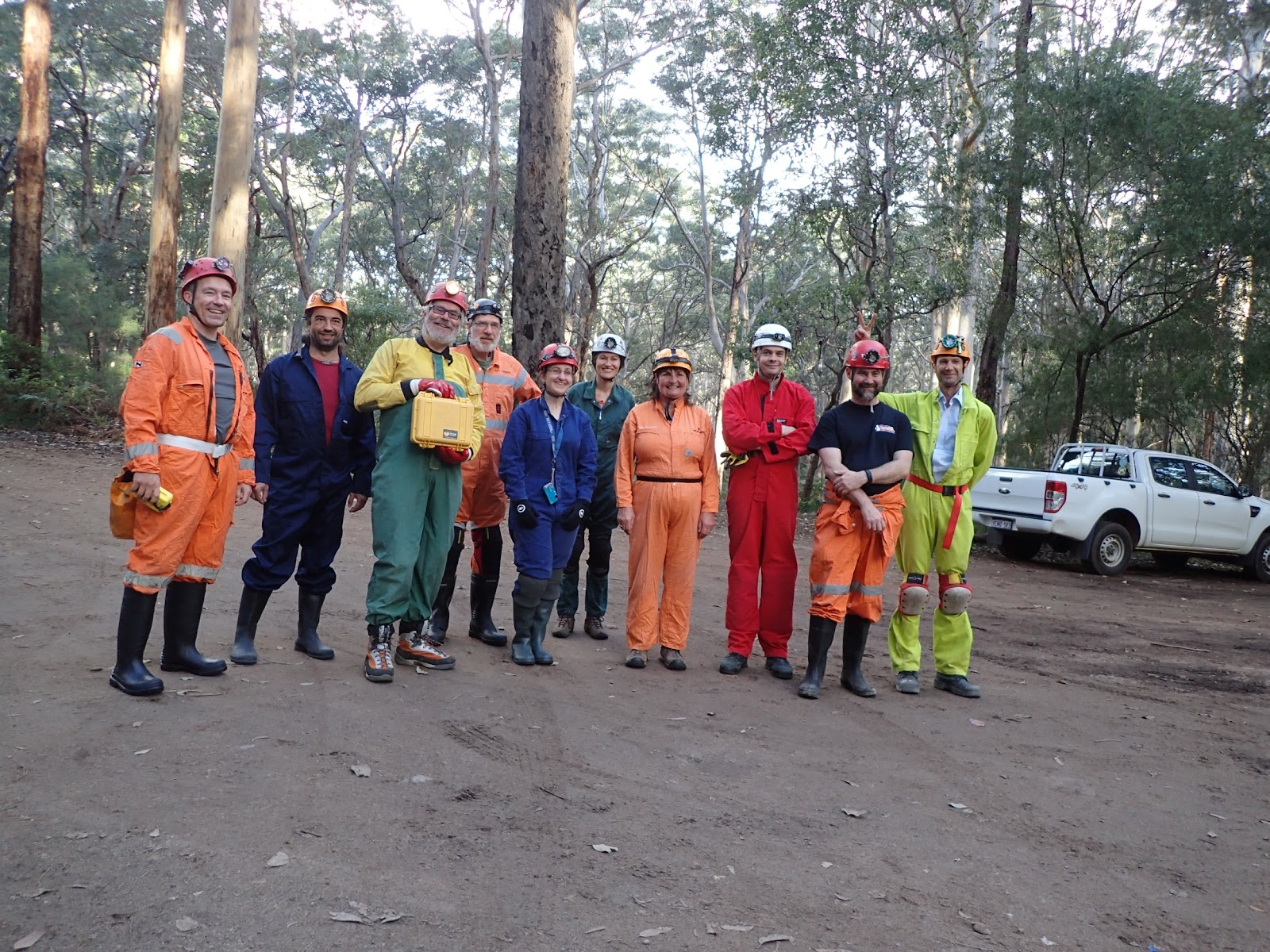
The Margaret River pre-conference excursion team.

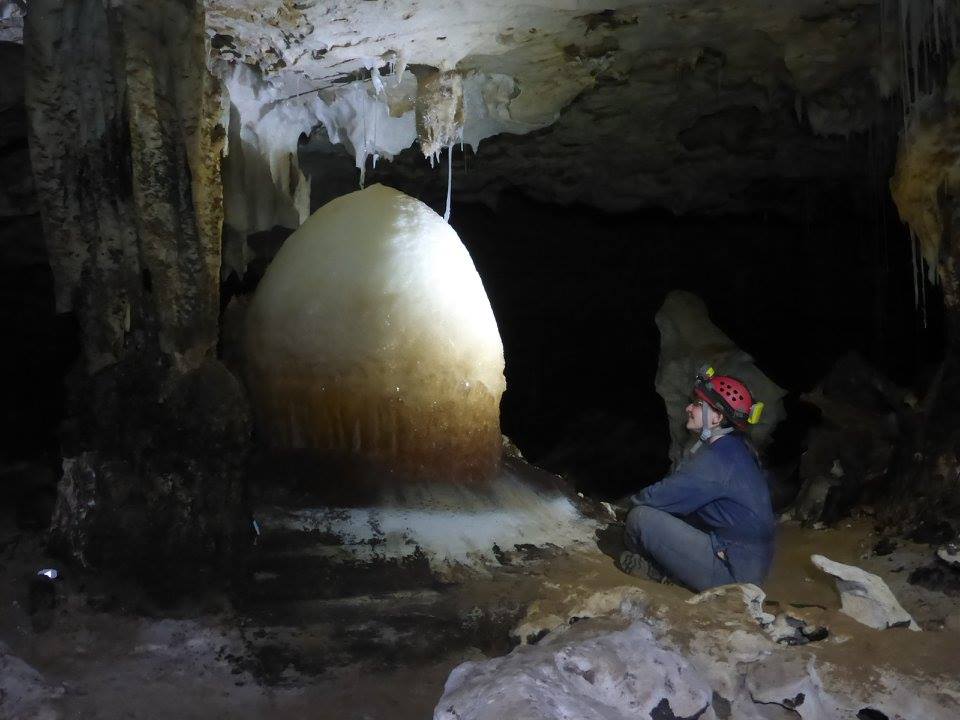
We visited 7 caves during the Margaret River excursion, with the jewel in the crown being Easter Cave; incredible formations from start to end and we were only allowed to see half of the cave! Below are a few photos that came out best and don’t do justice to the sheer number of delicate and impressive formations.

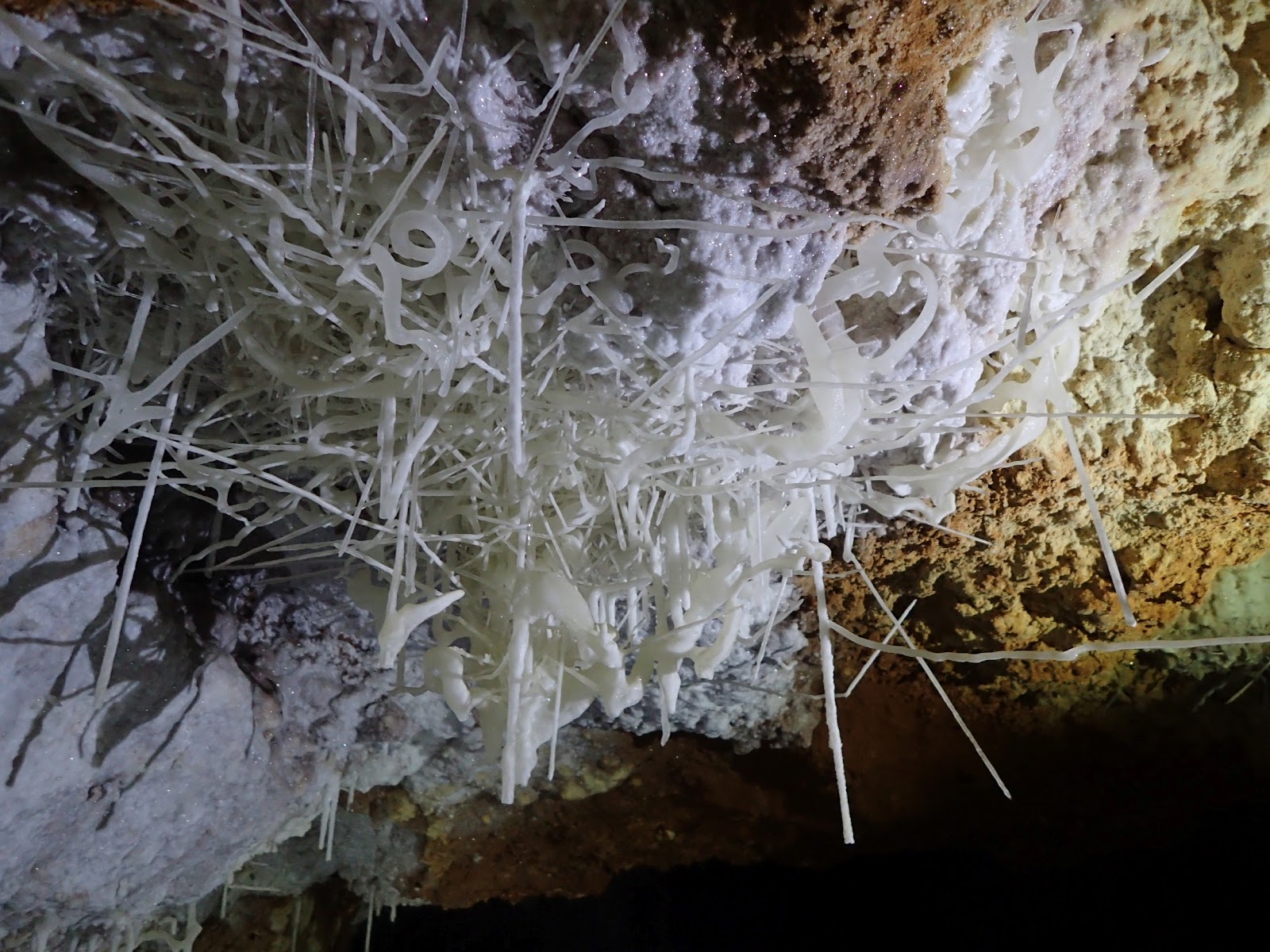
Helictites, Easter Cave
The Question (which is: Does the formation touch the roof or not). Photo: Tim Moulds

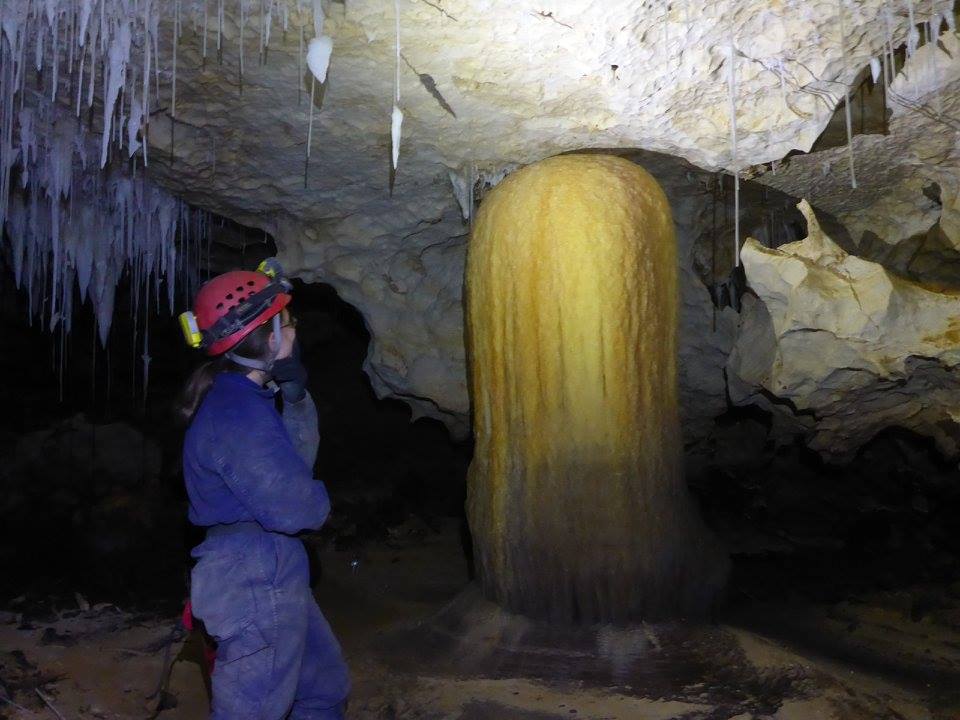
The Lemon, Easter Cave Photo: Tim Moulds

The Epstein Formation, Easter Cave.


Claire at the Helictite Table, Easter cave.


You have to be careful passing through Easter Cave as almost all of the formations are within touching distance

Best way to describe Easter cave, is get all of the UK’s finest formations and line them up, that is just the entrance series to Easter cave… Seriously it’s that well decorated!


Yet, not to be totally overshadowed were Strong’s and Crystal Cave. Whilst not as profusely decorated as Easter, they also contained some magnificent formations.

Duncan wearing the Judge’s Wig, Strong’s Cave.


Looking up underneath the Judge’s Wig, Strongs Cave.

Christmas Star extensions of Crystal cave

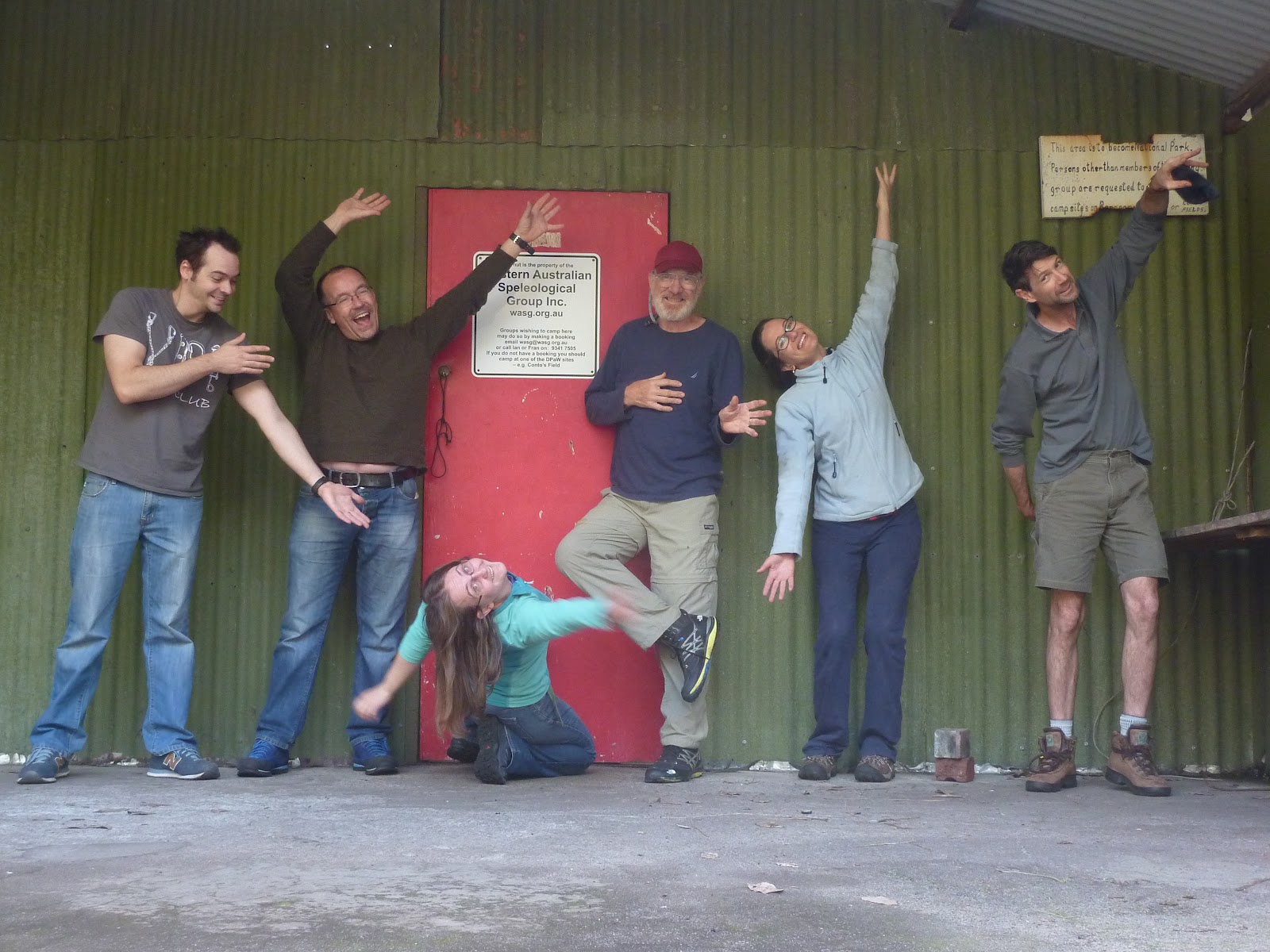
This pre conference excursion was run by the Western Australian Speleological Group and we thank them - especially Tim,Greg and Luana - for their time and organizing an amazing excursion.

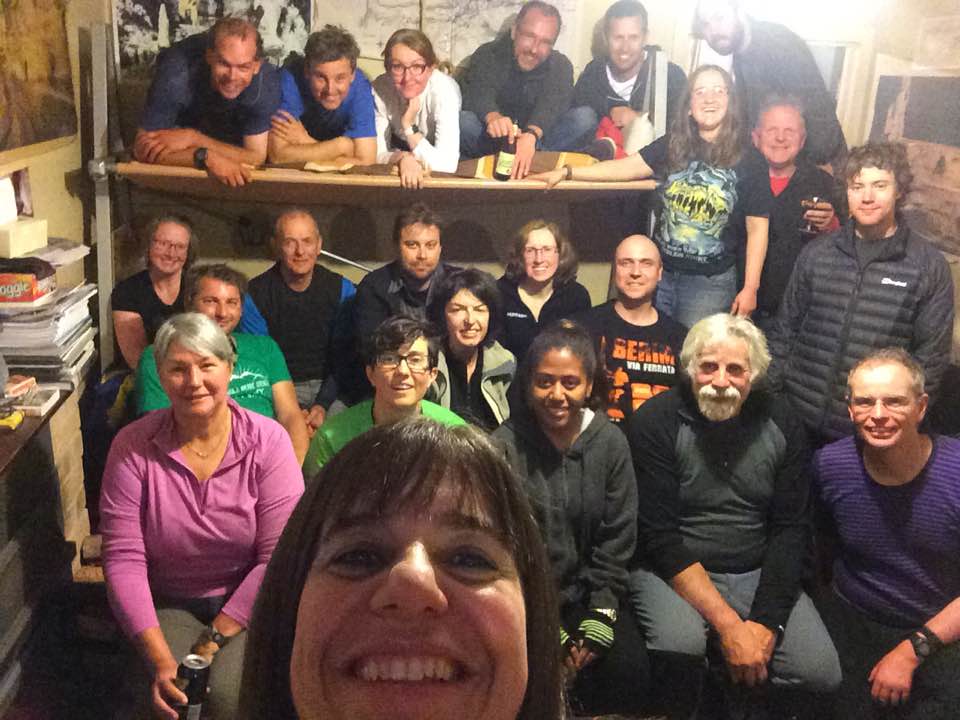
Crazy cavers at the WASG hut. Rob, Duncan, Claire, Tom, Luana and Greg


Conference week (23 – 29 July)


It was much cooler in Penrith near Sydney and our accommodation was a caravan park 30 minutes walk away from conference venue. It was sunny and t-shirt weather in the day, yet, thick coat time at night. A dedicated marquee held the poster displays, club stands and the speleo olympics. Presentations were held in the main Panthers building.


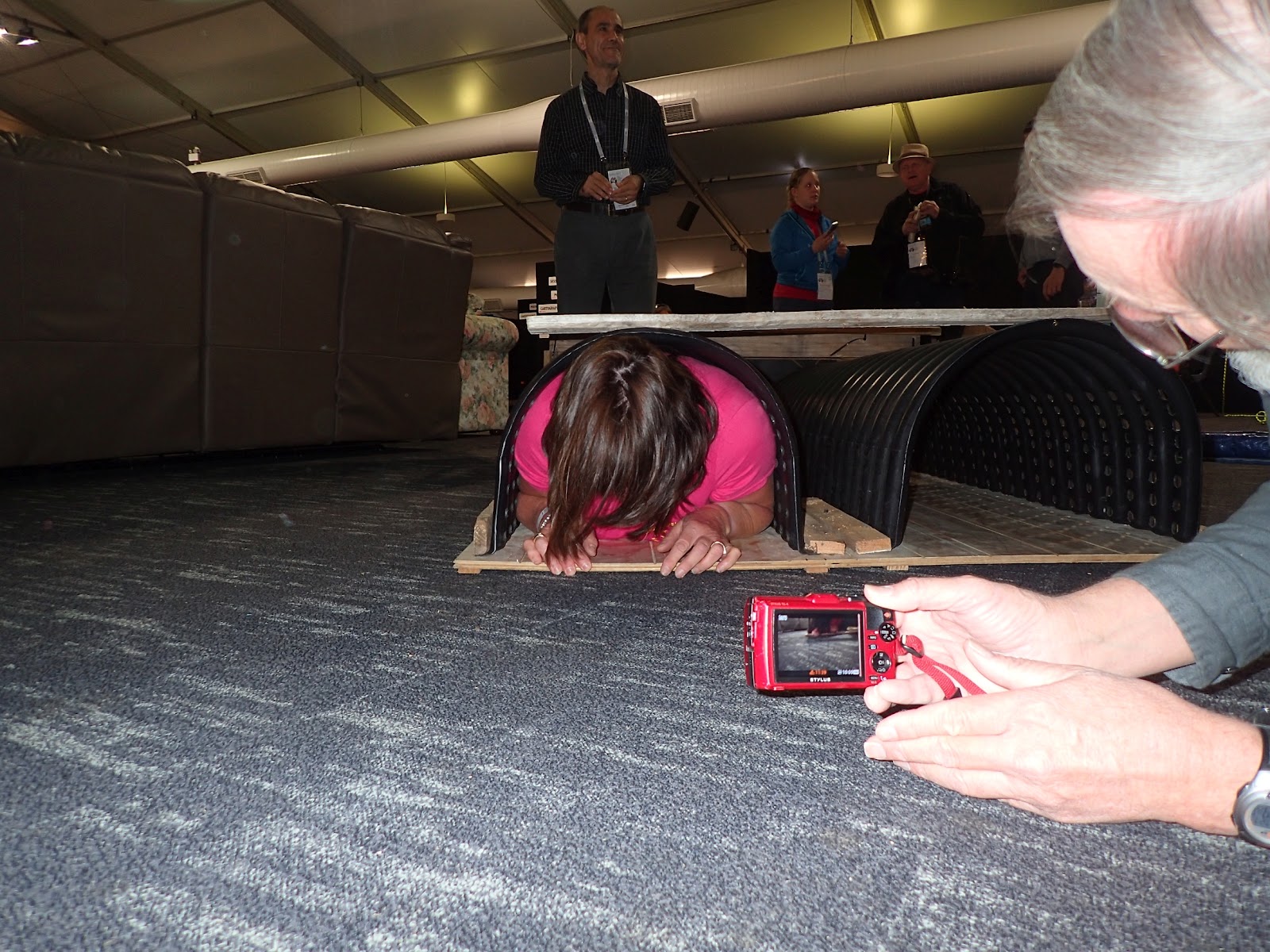
Pete and Angie Glanvill attempt the speleo olympics.

It was not all work and no play, we attended a mid-week dry canyoning trip in the Blue Mountains.

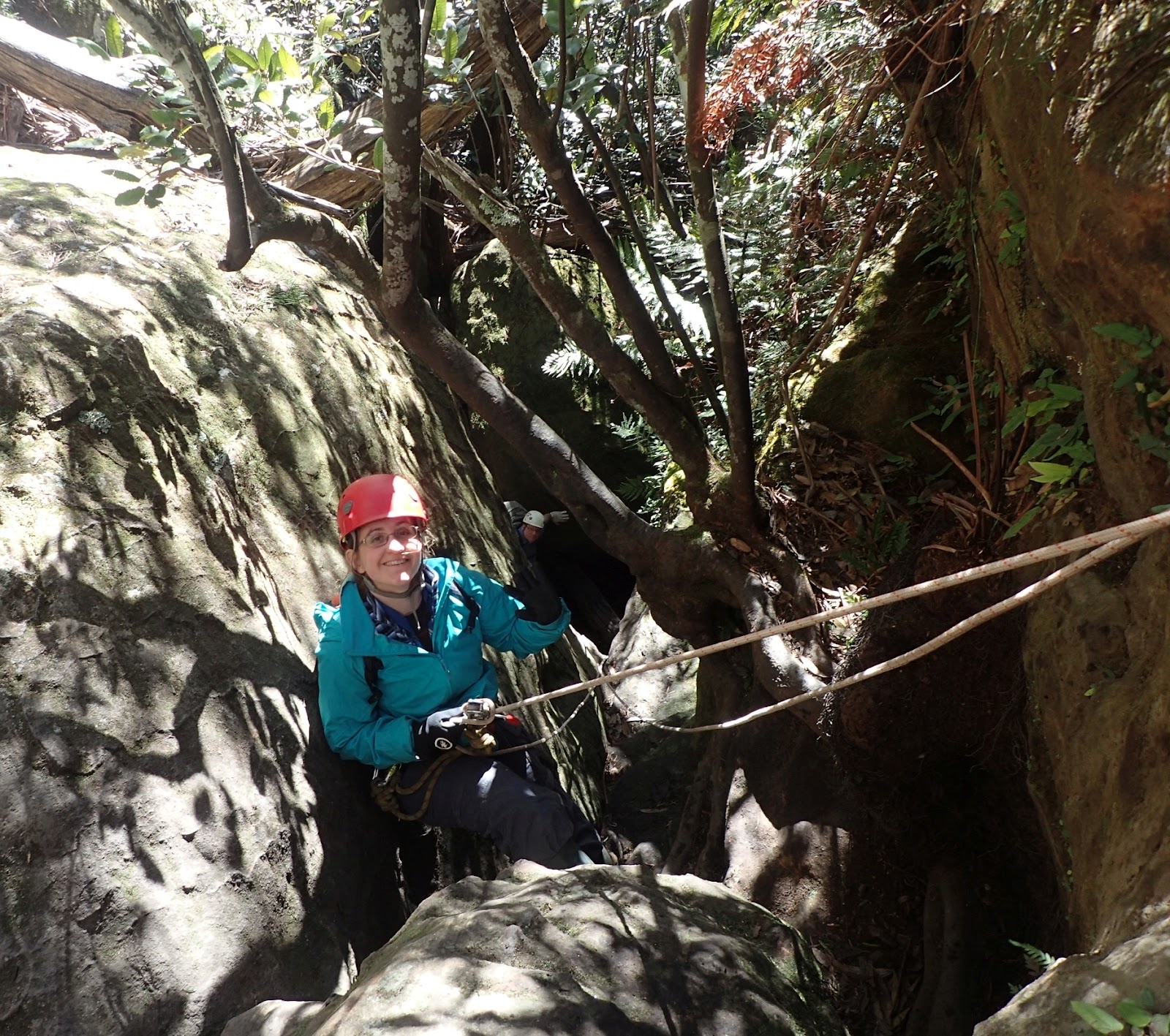
Claire at the top of the second pitch,dry canyoning in the Blue Mountains.

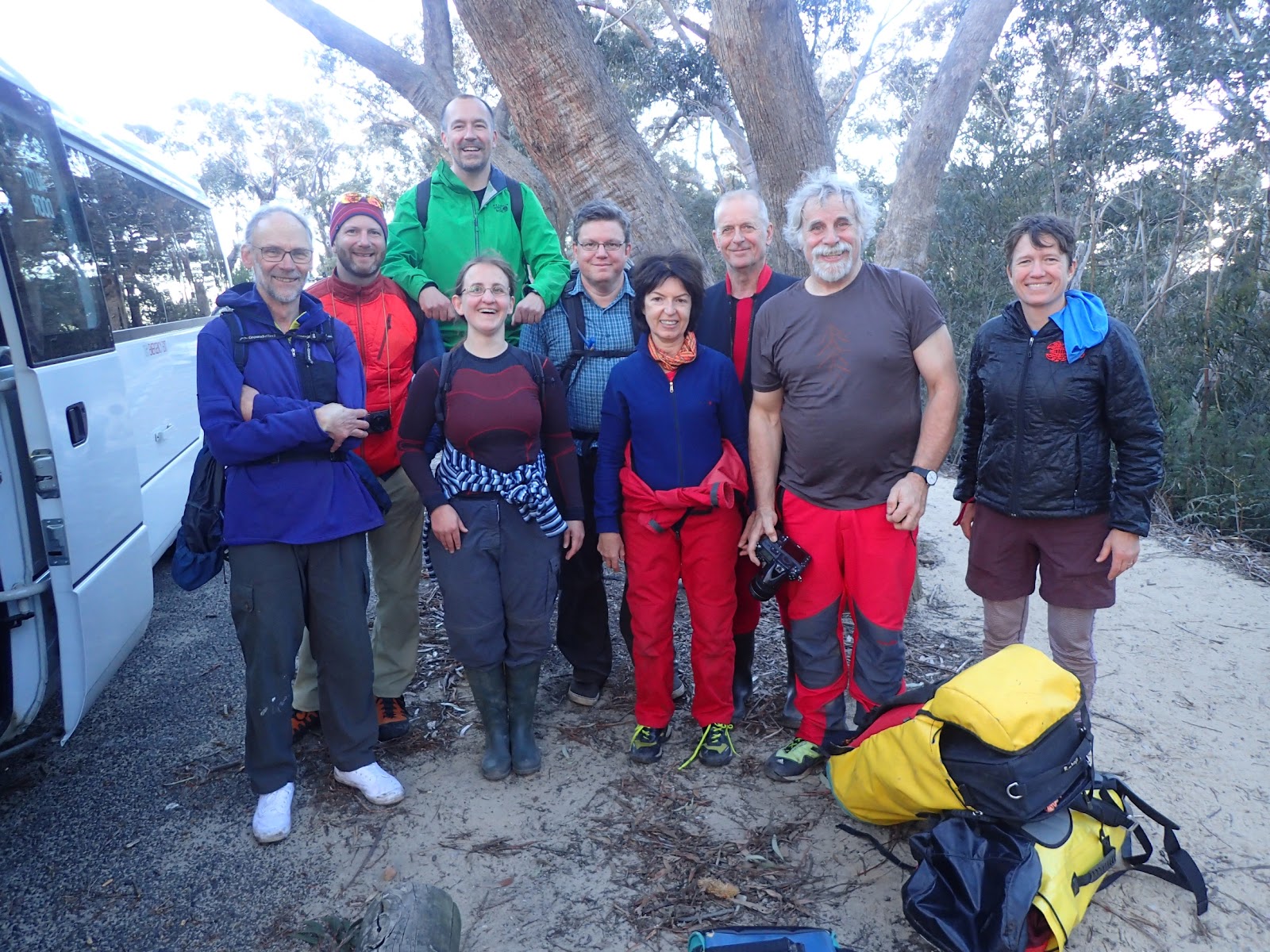
Our canyoning team (there were actually two other groups following different routes)

The conference week past in a flash ending with the traditional banquet. This started with a traditional Aboriginal welcome followed by food and much drinking. A slightly sad event as we were saying our goodbyes to new friends.

Jenolan Caves post-conference excursion


But it was not over! On the Sunday we met up at the Panthers event site, crammed ourselves into the back of a “trooper” and headed to Jenolan in the Blue Mountains for a week of caving!

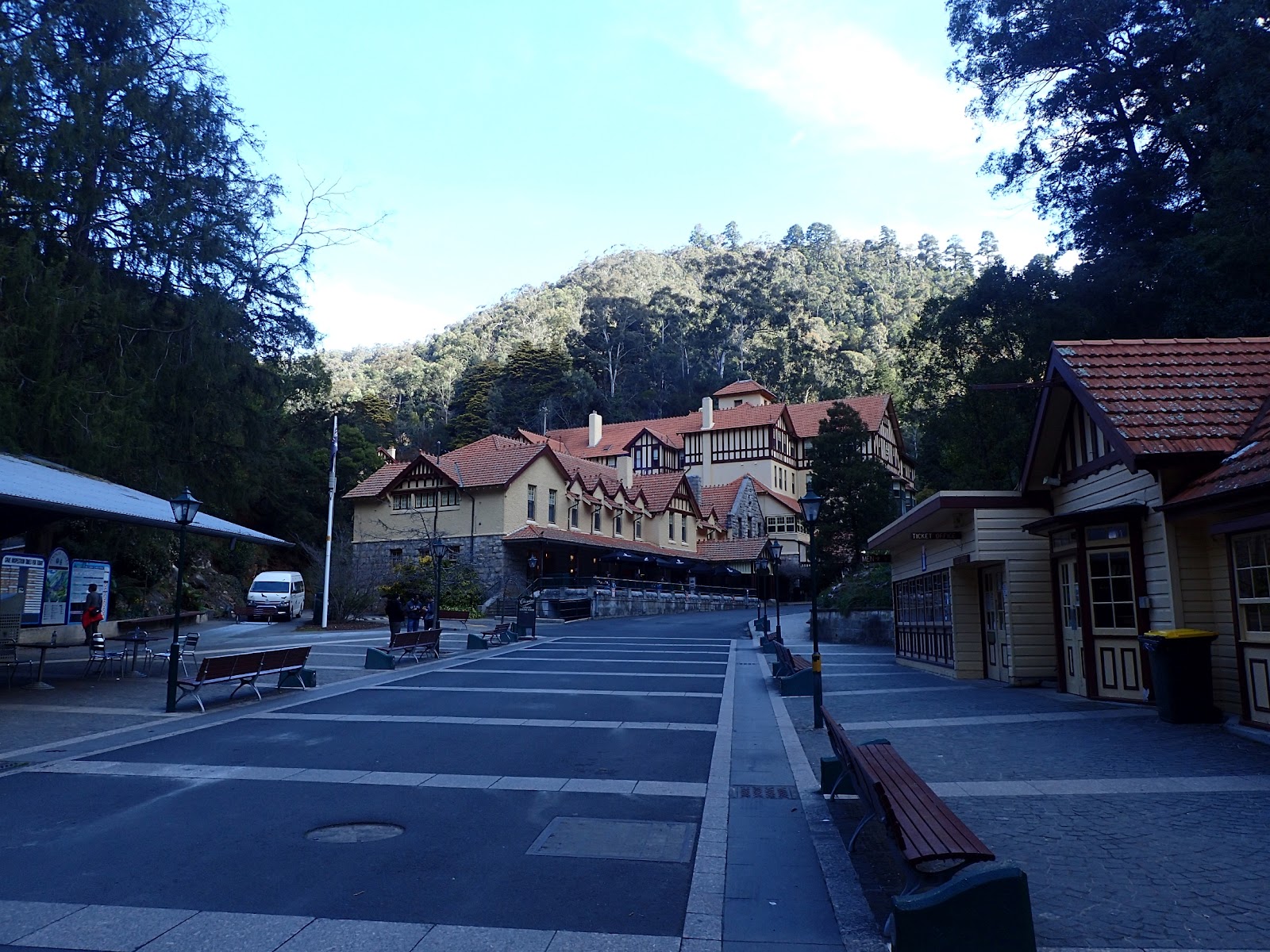
Caves House, Jenolan. We stayed in a hostel behind the main building.

This excursion was larger with about 20 people attending with 10 different nationalities! The organizers had arranged a week of sporting caving and access into the show caves.

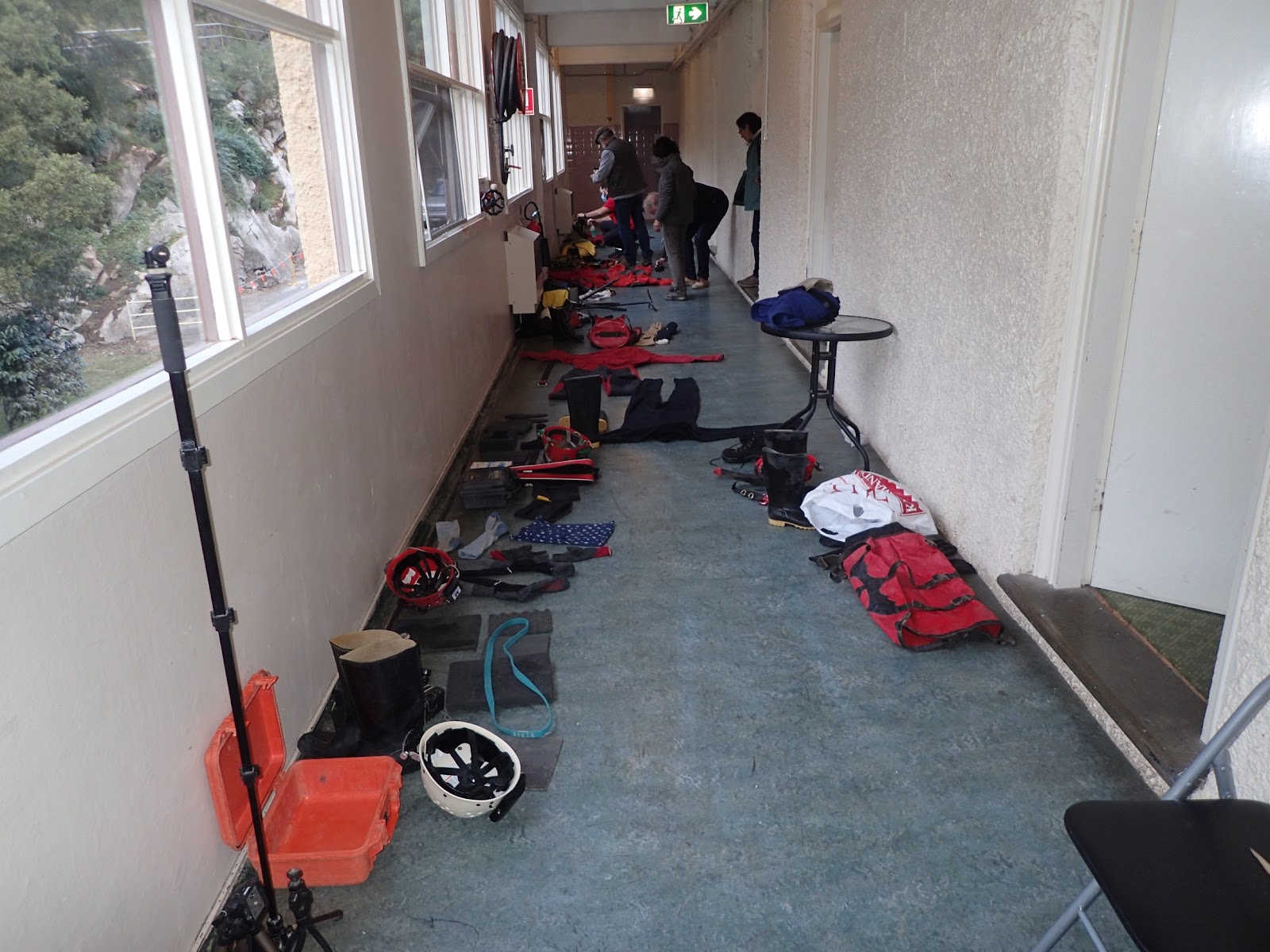
Decontamination was taken very seriously, with peoples kit sprayed to kill off any fungus that could potentially cause white nose syndrome.

Rigorous decontamination was carried out before anyone's equipment went underground.

We were very privileged as one cave (the highly decorated Barralong) issues only 2 permits a year and the ICS excursion took them both!

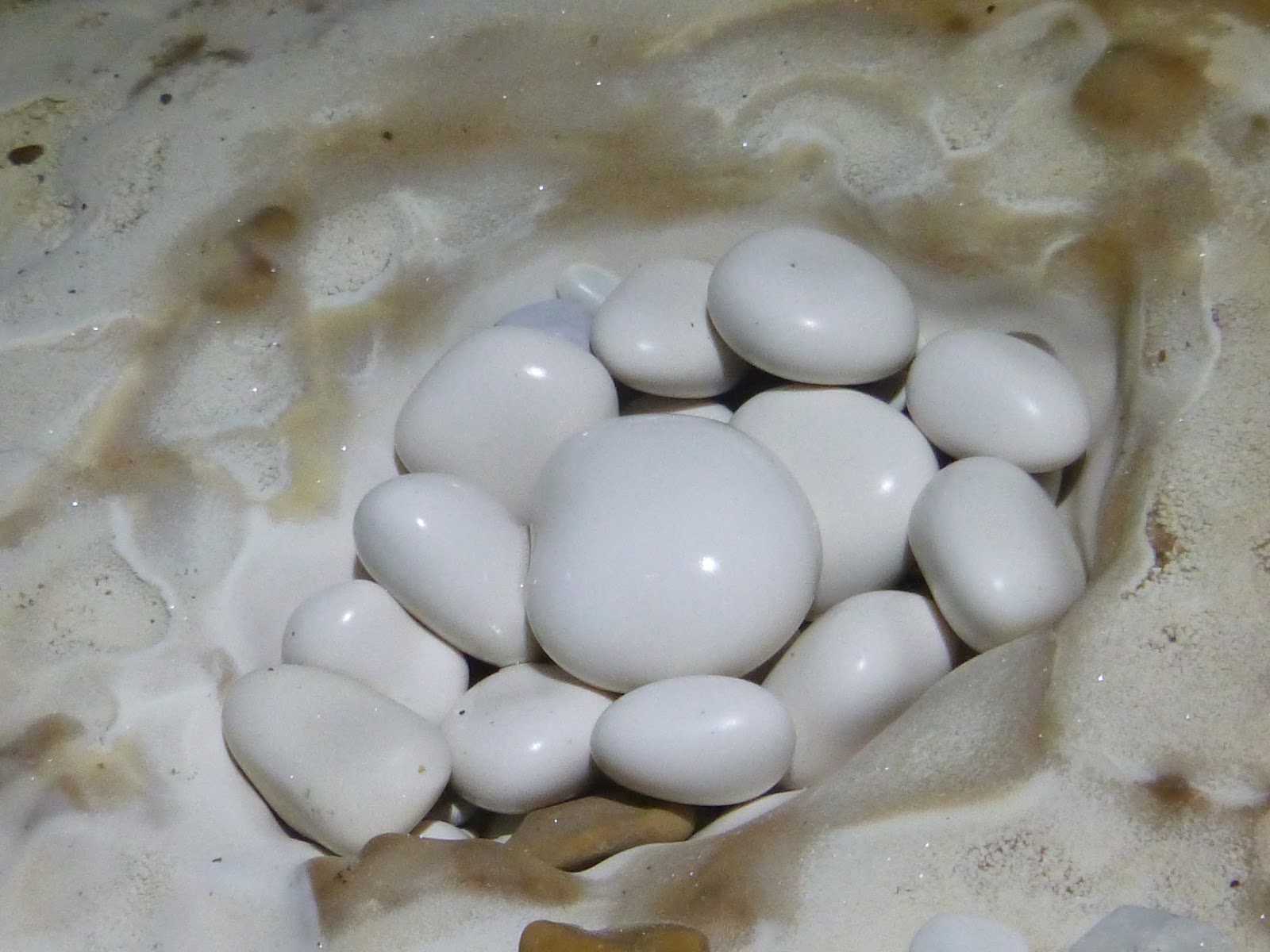
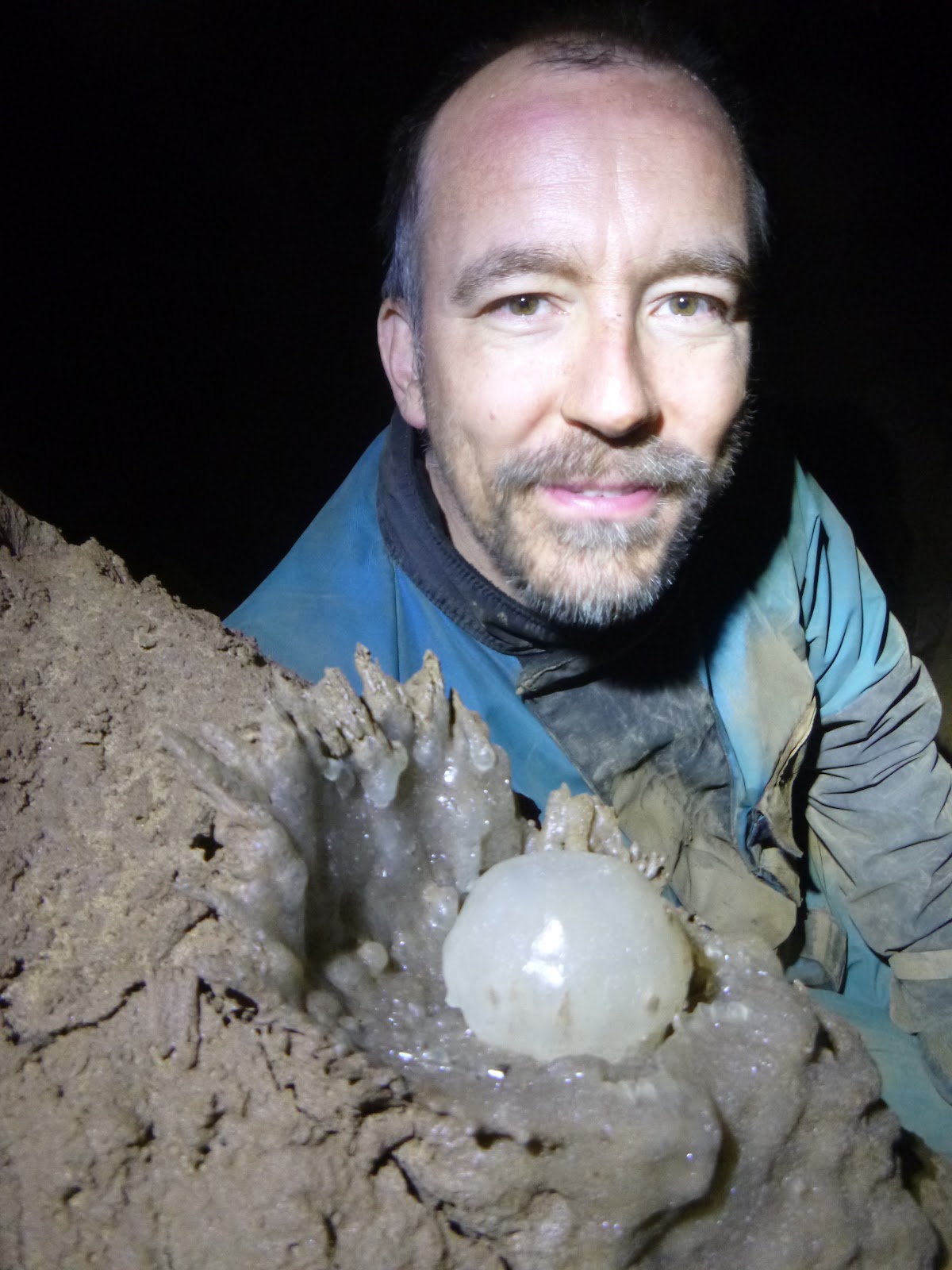
Cave pearls in Barralong
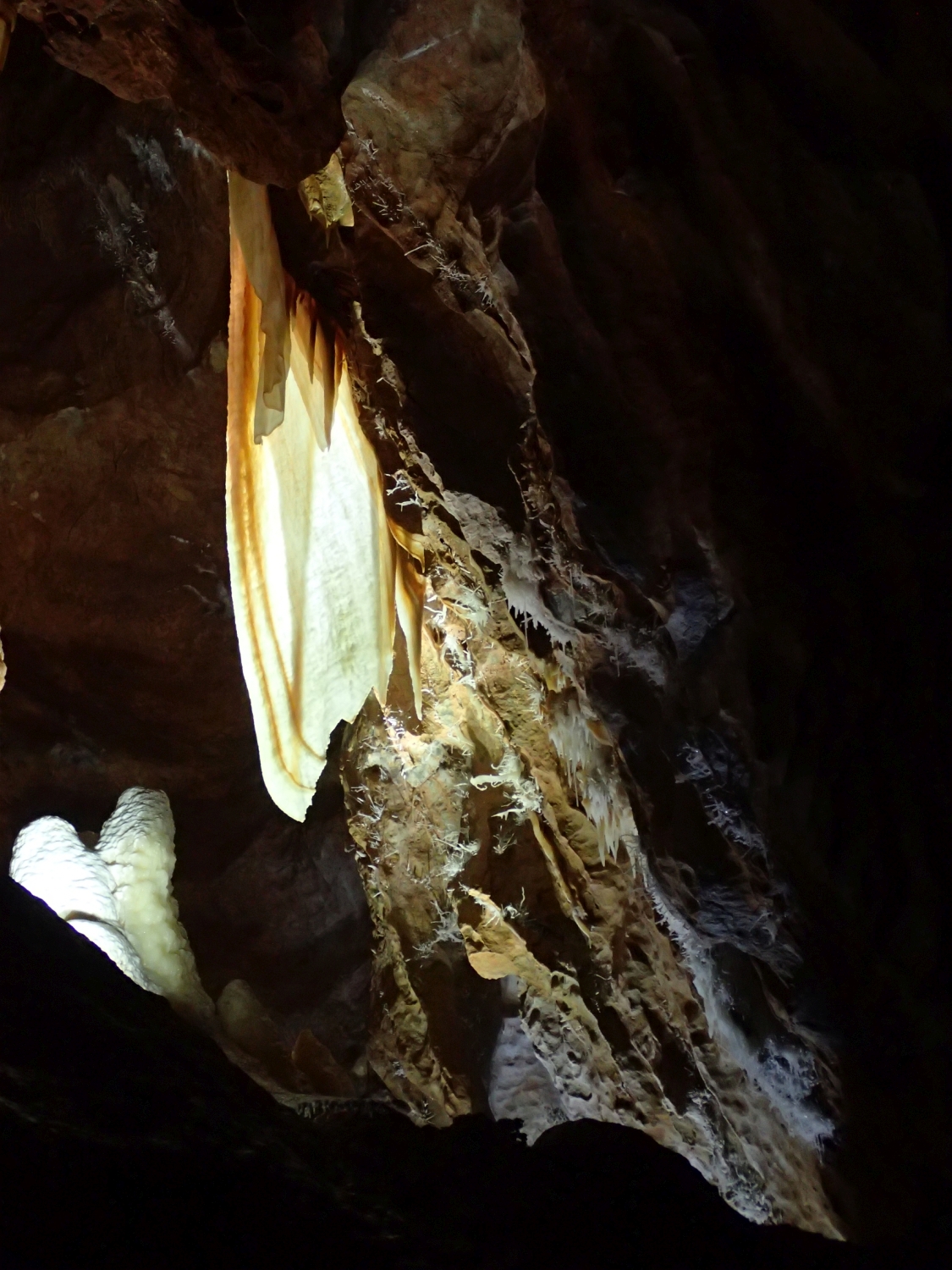
A huge curtain impressively lit within the show cave, helectites grow from the wall.

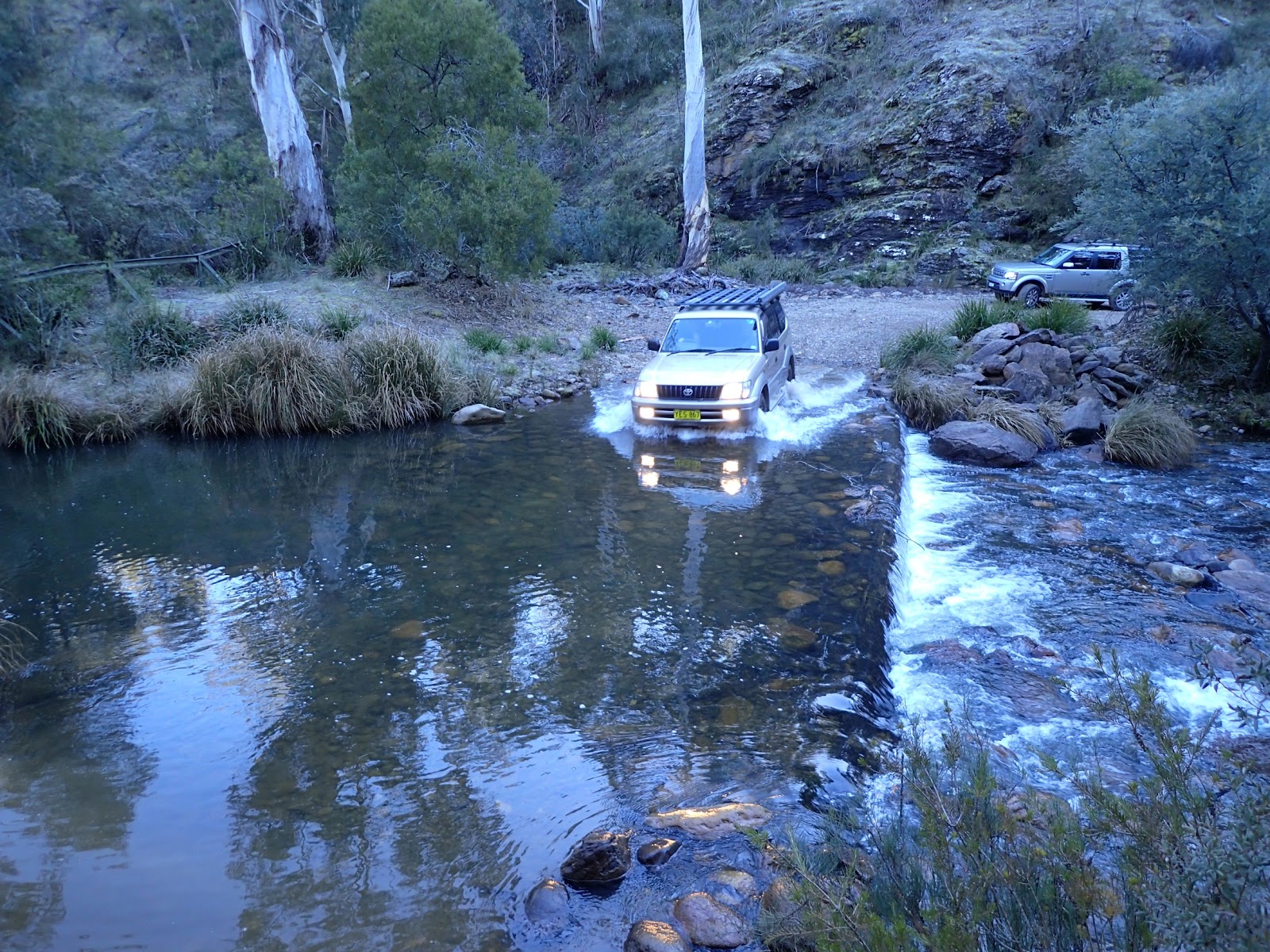
Tuglow was to be the week’s “main event” with the entire group visiting the system in one hit, splitting up into several groups: the photographers doing the “gentle trip” and the full on “mega trip” with a guaranteed misery promised with an icy cold swim! Of cause the mega trip was a red rag to a bull to us and Claire and I eagerly signed up! Getting there involved a river crossing.

The original date for Tuglow was brought forward for fear of overnight rains swelling the river crossing.

Tuglow entrance involved abseiling (100m in 2 pitches), a high traverse above the stream with a sh*t scary bold step, big chambers, more abseiling, a “refreshing” dip (for the first time ever, being short actually meant that Claire did not have to swim!), then ladders up and out through fantastic flowstone chimneys. We were the last out and did a quick stomp up and over the ridge back to the cars to find a nice cup of tea on the brew. To top off an awesome day our excellent Australian hosts provided a BBQ back at their cavers hut!

Claire in the mainstream way of Tuglow, probably the best sporting trip in our visit to Australia.
Mark at the impressive gour pools in the main stream of Tuglow.


The gang at the cavers hut for a BBQ (Photo: Leda Zogbi)
Our last trip was Spider Cave, a trip made serious due to 3 very tight squeezes. Rescue beyond these would be impossible. A fourth squeeze, a very unpleasant tight flat out crawl gives access to a chamber with the unusual Palantear formation.

 Csaba the Hungarian photographer preparing his shot, he has specialised in 3D photos, Spider Cave.

Duncan with The Palantear

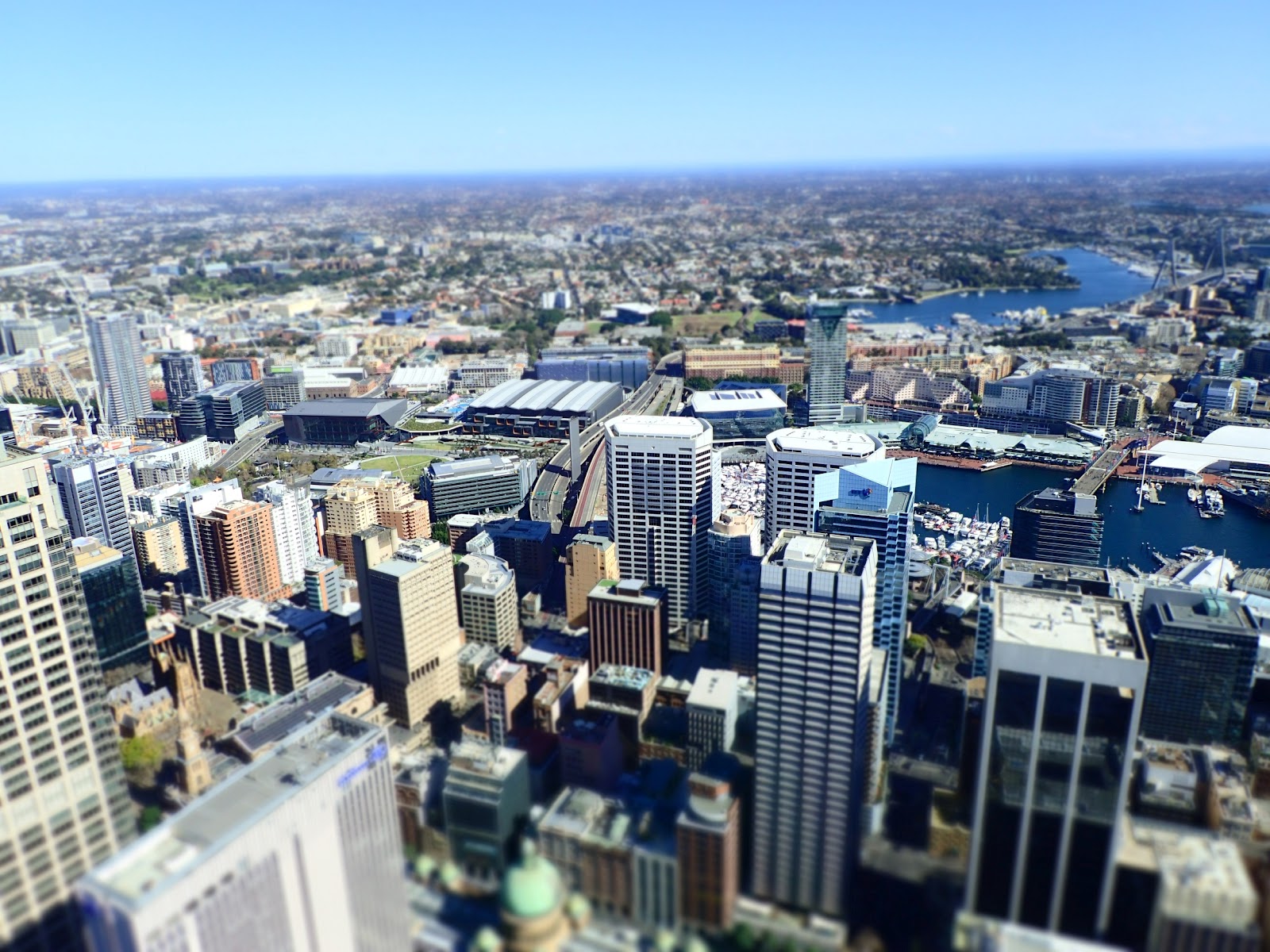
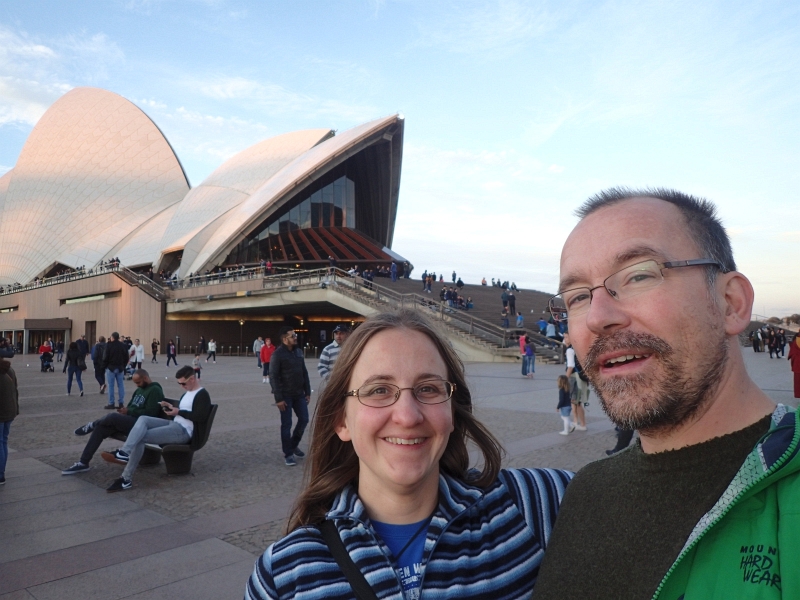
Like the previous two weeks, our Jenolan week passed in a blink of an eye and it was all too soon to head home. We were dropped off in Sydney and did some last minute sightseeing, the Opera House and Sydney Eye tower. It was then back on the planes for a soul crushing 24 hours of travel.

This post conference excursion was run by the Newcastle & Hunter Valley Speleological Society and we thank them - particularly Andrew, Peter, Mel, Dan, Mark, Steve and Chris - for their time and organising an amazing excursion.

Oddly Sydney does not look so big when looking down from the tower…

Here is the proof showing Claire and I were on the opposite side of the planet!

Highlights?


Duncan - For me it has to be Easter cave and the stunning formations it held, another “highlight” was passing the fourth squeeze in Spider cave in Jenolan, right on the limit of what I can physically fit, not a place to lose your head! The lowlight, well I guess that was when I blew $5 on a “pokie” in Panthers in less than 30 seconds...

Claire - The caving and making plenty of new international caver friends. These conferences are a great way to meet more cavers and get access to special caves that would be pretty much impossible otherwise. My favourite caves were the blindingly pretty Easter Cave in Western Australia and the fun, varied, sporting trip in Tuglow (Jenolan Caves). Ooh! And I mustn’t forget the kangaroos! I saw loads of them, including a field full of around 40 wild ones at one point, but it still wasn’t enough. Even briefly seeing a Huntsman spider (read VERY big spider) was a highlight as I won’t forget that in a hurry. I was also delighted that Spider Cave did not live up to its name and be filled with spiders. Lowlight was the over 24 hours of travelling time to get there.